


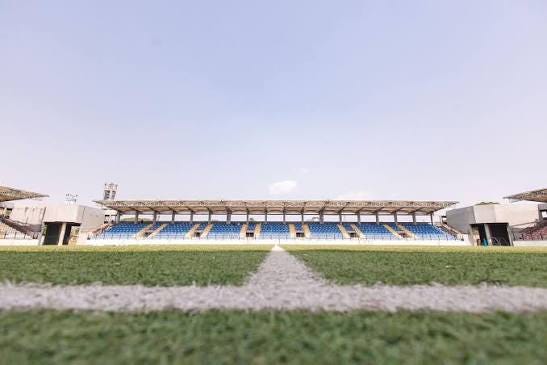
A new chapter unfolds in Nigerian sports history as the 2026/2027 Nigeria Premier Football League (NPFL) regular season gets underway. This campaign represents more than just a quest for a trophy, it marks a heavily commercialised, rebranded era for the domestic top flight. For the three Lagos-based NPFL clubs, Ikorodu City, Inter Lagos, and Sporting Lagos, preparations for the new season would be ideal if not for a major logistical challenge: the league body has approved only a single venue for matches in the city.
The trio has no option but to compete at the Mobolaji Johnson Arena in Onikan, currently the only stadium approved for NPFL fixtures in Lagos. Compounding the bottleneck, two Nigeria National League (NNL) clubs are also expected to use the facility, meaning five professional clubs could be competing for pitch time at a single stadium this season. Each NPFL club plays 19 home matches in a 38-match league campaign. With three Lagos teams involved, the Mobolaji Johnson Arena could potentially host 57 NPFL home fixtures alone, before factoring in the demands of the two NNL sides.
Despite these constraints, club officials told Weekend Trust Sports that rather than letting the venue crisis overshadow their preparations, they remain focused on achieving success in the top division. For Ikorodu City, the pre-season provided an opportunity to integrate new talent while staying true to the club’s identity. Samuel Bamisebi, the club’s Director of Media and Communications, emphasised their proactive approach. “The club is doing everything in its ability to prepare for the coming season, trying to get new and young players who fit the club ideology,” Bamisebi said.
Sporting Lagos has similarly focused its build-up on tactical development and testing squad depth against league rivals. Head Coach Jeffrey Buter expressed confidence in his team’s trajectory following promising pre-season outings. “We’ve always been confident in our abilities and the direction we’re headed as a club,” Buter said. “That’s not something we can totally control. We’ll find available facilities and use them when due.”
For newly promoted Inter Lagos, stepping up to the NPFL represents a major milestone. General Manager Adigwe Gabriel Ikechukwu noted that their recruitment strategy was tailored specifically for the rigorous physical and logistical demands of top-flight football. “We like to focus on young players because the league is going to be very tough in terms of the sheer number of games and travel distances,” Ikechukwu explained.
Addressing the stadium situation, Ikechukwu praised the state government’s infrastructure efforts, noting that renovations at Teslim Balogun Stadium and Agege Township Stadium are near completion. “Onikan is the best venue for us because it’s a modern stadium without a traditional athletics track,” Ikechukwu said. “The closeness of the stands to the pitch creates an environment where you can feel the passion from the players.”
The winners: the three Lagos clubs, which are making the best of a difficult situation; and Lagos football fans, who will have a packed schedule of NPFL matches. The losers: the clubs, which face logistical challenges; and the Lagos State Government, which must complete the renovation of other stadiums.
Bottom Line: Three Lagos NPFL clubs are sharing one stadium this season. The venue crisis is a challenge, but the clubs are determined to compete. The question is whether the stadium bottleneck will affect the quality of football.