


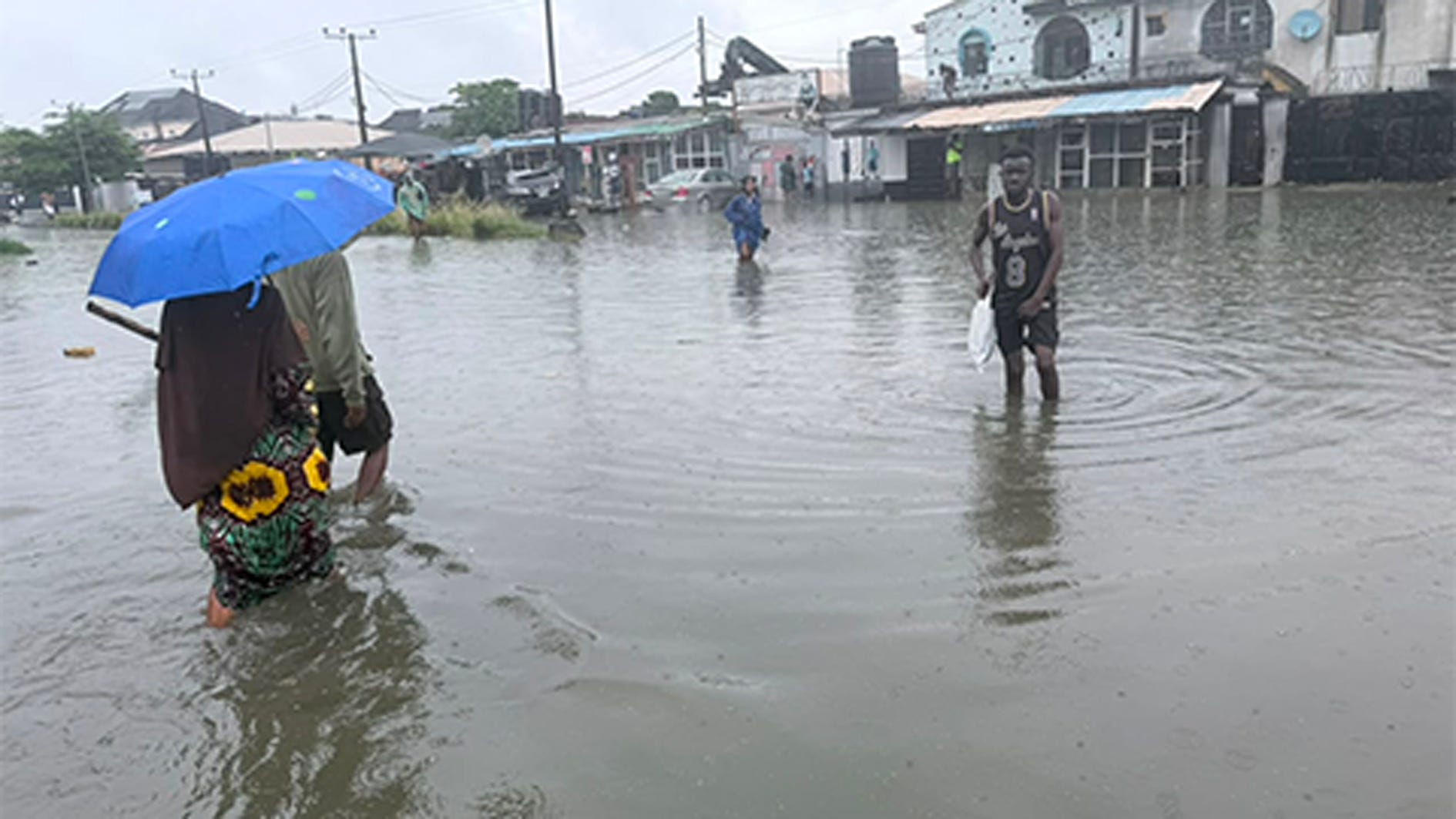
Lagos received more than ₦1.25 billion in ecological fund allocations between January and May 2026. The state collected ₦251.46 million in January, ₦186.09 million in February, ₦238.92 million in March, ₦299.57 million in April and ₦277.67 million in May. Yet after heavy rainfall, major roads and residential communities remain submerged. Videos showed floodwaters overtaking roads in Lekki, Gbagada, Ikorodu, Ikeja, Oshodi, Ogudu, Maryland and surrounding communities. Commuters were stranded. Vehicles were submerged. Some residents resorted to boats for transportation.
The Ecological Fund is a federal intervention pool established to help states address flooding, erosion, drought, desertification and other environmental emergencies. The money is supposed to fund preventive and remedial projects. Instead, it flows into a state that continues to flood.
Lagos State Commissioner for Environment and Water Resources, Tokunbo Wahab, acknowledged that flooding cannot be completely eliminated because of the state’s geography and rapid urbanisation. “In the past three years, we have seen remarkable improvements,” he said. “But I would be playing to the gallery if I said there will not be issues of flash flooding in Lagos.”
The national risk assessments are grim. The Nigeria Hydrological Services Agency (NIHSA) listed Lagos among the 33 states and the Federal Capital Territory at high risk of flooding during the 2026 rainy season. The National Emergency Management Agency (NEMA) identified Lagos as one of the worst-hit states this year, reporting that 52,013 people have been affected. Nationwide, floods have claimed 231 lives, affected 315,762 people, displaced 113,367 residents, damaged 40,493 houses and destroyed 46,304 farmlands.
The National Economic Council recently approved ₦83.2 billion, half of the ₦166.42 billion requested by the Anticipatory Action Task Force, to strengthen flood preparedness and response. That money will be needed. But it will not solve the underlying problem: a state built on a swamp, with inadequate drainage infrastructure and rapid urbanisation that outpaces planning.
The winners: consultants and contractors who benefit from ecological fund projects. The losers: Lagos residents who pay taxes and receive flooded roads in return.
Bottom Line: ₦1.25 billion is a lot of money. It is not enough to fix a city sinking into its own geography.