


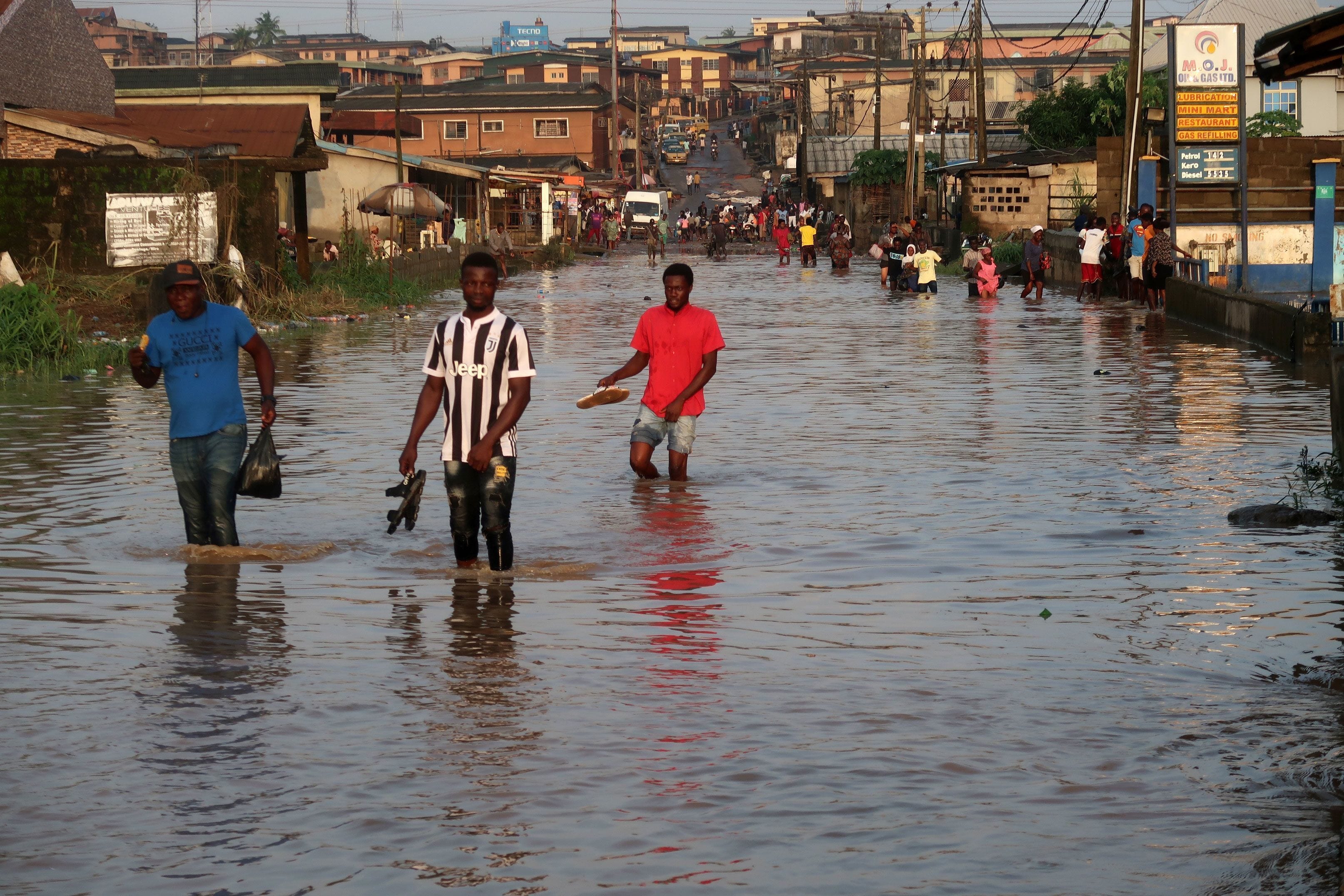
Heavy downpours that swept across Lagos on Monday left thousands of motorists, commuters and residents stranded as floodwaters submerged major roads, disrupted businesses, and worsened conditions in communities already battling weeks of flooding. From Apongbon and Marina to Leventis, Ikoyi and Lekki, several parts of the commercial capital were inundated after hours of rainfall, triggering traffic gridlock that stretched for kilometres and bringing economic activities to a standstill.
Many commuters were forced to abandon vehicles and trek long distances as traffic snarled across major routes. Along the Apongbon corridor, congestion extended through Eko Bridge to Costain, leaving workers stranded for hours and delaying business operations across the city. For motorists caught in the flood, the cost was immediate. Several vehicles stalled after attempting to navigate flooded roads, with owners left facing repair bills and insurance claims. “I never knew that the water was very deep. I wouldn’t have risked it,” a motorist whose vehicle broke down after driving through floodwaters at Leventis lamented.
The latest flooding comes as many Lagos communities continue to struggle with persistent inundation following weeks of continuous rainfall, raising fresh concerns about the state’s preparedness for what meteorologists have warned could be an unusually wet rainy season. In Ijagemo, Ijegun, in the Ojo Local Government Area, some residents said they had already abandoned their homes due to the flooding. “We moved out of our homes two weeks ago due to the flood,” said Adeola Ibrahim, a resident of the community. “This year’s flood is the worst we’ve experienced so far”.
According to Ibrahim, residents had hoped recent road construction projects in the area would improve drainage and reduce flooding. Instead, he said, the situation has deteriorated because adjoining canals were not properly developed. “This happened despite the newly constructed road in the area. The government refused to channel the canal despite spending huge amounts on road construction, further worsening our situation,” he said.
The flooding has reignited debate over the causes of Lagos’s recurring flood crisis, with residents blaming inadequate drainage infrastructure, blocked canals and poor urban planning, while state authorities point to natural factors beyond their control. Responding to the latest incident, Tokunbo Wahab, Lagos commissioner for environment and water resources, attributed the flooding largely to a sharp increase in lagoon water levels. “The flooding currently being experienced in some parts of Lagos is largely attributable to a significant rise in the lagoon water level, which has increased by approximately one metre,” Wahab said in a post on X. “This elevated lagoon level is impeding the effective discharge of stormwater from drainage channels into the lagoon, resulting in temporary flooding in some areas”.
According to the commissioner, the high lagoon level has effectively blocked drainage channels from emptying into the lagoon, causing stormwater to accumulate on roads and in communities. “As rainfall subsides and the lagoon water level gradually recedes, the accumulated stormwater on affected roads and streets is expected to drain off,” he said. Wahab appealed to residents to remain calm, assuring them that government agencies were monitoring the situation and implementing measures to reduce the impact of the flooding.
The latest incident adds to growing concerns over Lagos’s vulnerability to flooding. The state, which sits barely above sea level and is surrounded by lagoons and the Atlantic Ocean, has experienced repeated flooding in recent years, with experts warning that climate change, rising sea levels and rapid urbanisation are increasing the frequency and severity of flood events.
This echoes the 2012 floods that devastated Lagos and other parts of Nigeria, exposing the country’s lack of preparedness for climate-related disasters. The mechanism then was different, but the result was the same: communities left vulnerable and a government response that came too late.
The winners: none. The losers: Lagos residents, who face disrupted lives and financial losses; businesses, which suffer from prolonged gridlock; and the state government, which faces growing criticism for its failure to address the flooding crisis.
Bottom Line: Lagos is underwater again. The government blames the lagoon. Residents blame the government. The truth is somewhere in between. The question is whether anyone will fix the drains before the next downpour.