


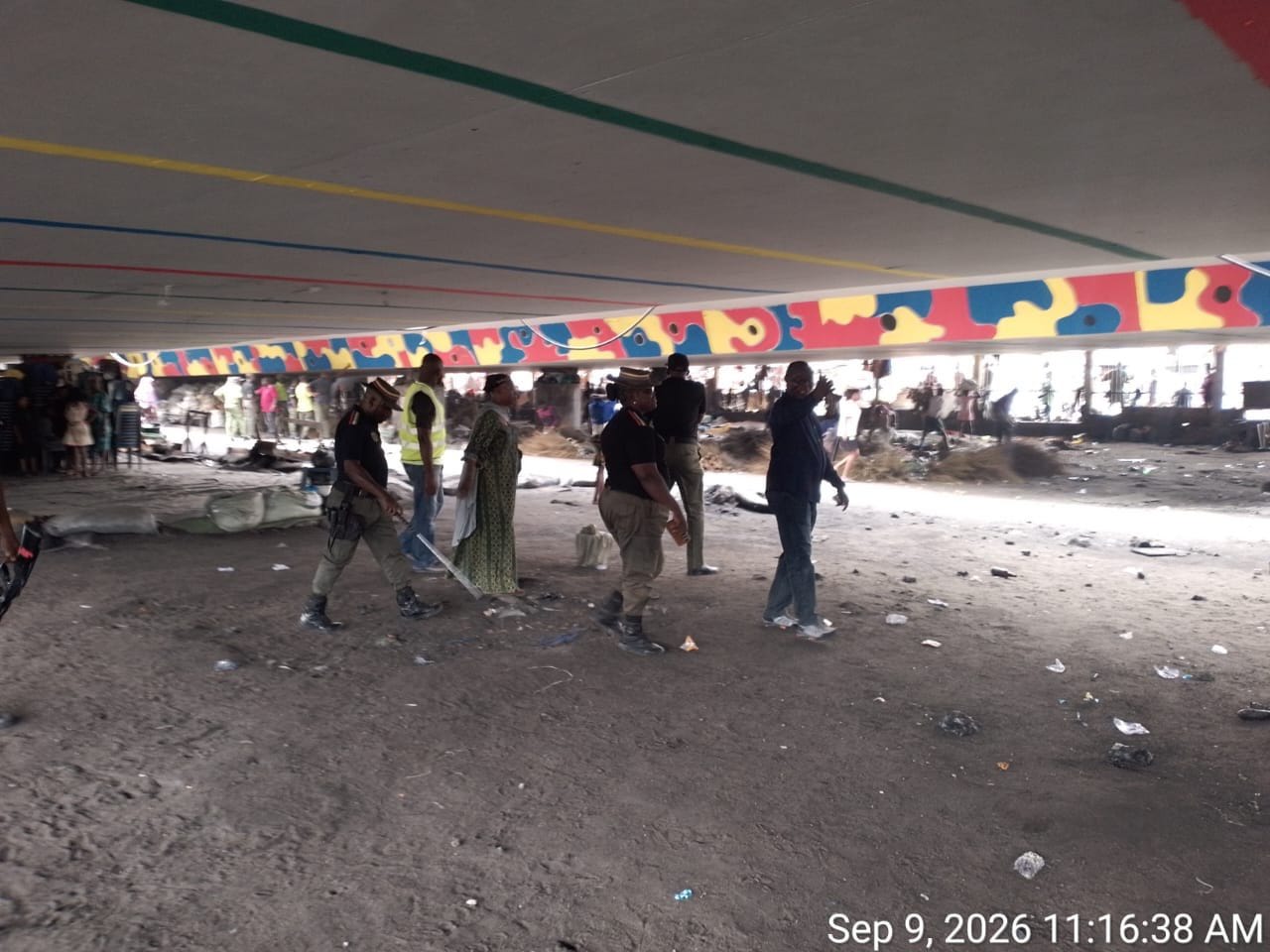
Social media posts revealed makeshift homes and warehouses under bridges like Oja Oba, with illegal electricity taps raising safety alarms near roads and rail lines. Commissioner Tokunbo Wahab clarified that one widely shared video was two years old, sharing fresh images of the now-cleared Oja Oba site and urging date checks to prevent misinformation.
Recent operations on September 9, 2026, saw workers dismantle structures in high-visibility vests, part of ongoing efforts in areas like Oko-Oba and Fagba to address hazards. The actions highlight Lagos’s housing shortages and rapid growth, balancing enforcement with calls for better urban planning.
The clearing of settlements under bridges is a recurring feature of Lagos’s urban management. The state argues that the structures pose a danger to the people who live in them, particularly where illegal electricity connections run close to fuel lines and rail tracks. The enforcement operations are framed as disaster prevention rather than demolition of homes.
Critics see something else. The settlements are occupied by people who cannot afford formal housing in a city where rents have risen far beyond the reach of minimum-wage earners. Clearing a structure does not create an alternative. The residents move somewhere else, often to another illegal settlement.
The spread of old videos alongside current footage complicates the picture. Wahab’s appeal for date verification is a recognition that digital misinformation can distort public perception of enforcement operations. But the underlying issue, that Lagos has a housing crisis and a housing deficit of millions of units, remains unresolved.
This echoes the 2020 clearing of settlements in Lagos, which also displaced hundreds of residents without providing alternative accommodation. The mechanism then was different, but the result was the same: enforcement without resettlement.
The winners: the Lagos State Government, which projects control over public infrastructure, and residents who fear the safety risks posed by illegal structures. The losers: the people displaced by the demolitions, who have nowhere to go, and the broader housing crisis, which remains unaddressed.
Bottom Line: Lagos cleared the settlements. The safety concerns are real. The housing shortage is realer. The question is whether enforcement will ever be matched by provision.