


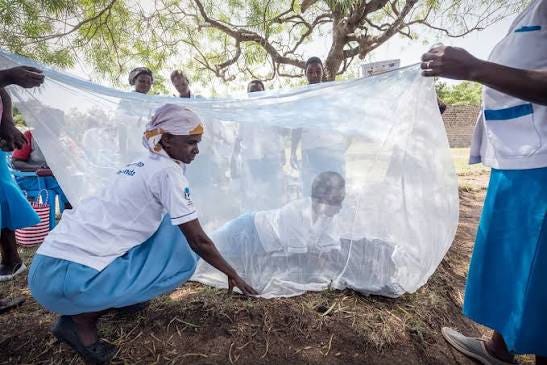
Kogi State will distribute 3,141,485 insecticide-treated nets to households across its 21 local government areas from 8 to 15 November 2026. It is the state’s first free statewide distribution campaign in nine years.
The exercise is being implemented by the state Ministry of Health, through its Malaria Elimination Programme, in collaboration with the National Malaria Elimination Programme and Malaria Consortium. The Commissioner for Health, Dr Abdulazeez Adams Adeiza, disclosed this during a media engagement in Lokoja. He was represented by the Permanent Secretary of the Ministry of Health, Maji Enoch.
Adeiza said Nigeria accounts for 24.3 per cent of global malaria cases annually and an estimated 30.3 per cent of the 579,000 malaria-related deaths recorded worldwide each year, citing 2025 World Health Organisation data. The 2025 Nigeria Malaria Indicator Survey showed prevalence declined from 22 per cent in 2021 to 15.2 per cent in 2025. Kogi’s prevalence stood at 8.9 per cent.
This mirrors the pattern of malaria control across Nigeria, which relies heavily on periodic mass net distribution campaigns funded by international partners. Kogi’s nine-year gap is not unusual. Many states have waited as long between campaigns. The difference now is that the state is coordinating with the NMEP and Malaria Consortium, which provide procurement and logistics support that the state health system cannot manage alone.
The delivery architecture is household-based. Personnel wearing uniforms bearing the malaria campaign logo will visit households to register residents and distribute the nets. The commissioner urged families to ensure at least one representative is available to complete registration and collect their allocation. He advised beneficiaries to air newly collected nets in the shade for 24 hours before hanging them and to tuck them properly around sleeping areas.
The human stakes are about prevention. A net that is used consistently can reduce malaria incidence by 50 per cent in sub-Saharan Africa, according to studies cited by the commissioner. A net that is distributed but not hung, or hung but not tucked, does nothing. The campaign’s success depends on follow-through that extends beyond the seven-day distribution window.
Winners and Losers
Winners: Households in Kogi, which gain free nets after nine years without a statewide campaign. The state health system, which gains a prevention tool that reduces clinical caseloads. Malaria Consortium and NMEP, which demonstrate delivery capacity.
Losers: Traders selling nets commercially, who face competition from free distribution. Households not captured in the registration process, which may miss out. The campaign’s impact, if follow-up on net usage is weak.
Bottom Line: A net is not a cure. It is a barrier. Kogi is distributing 3.1 million barriers. The test is whether households hang them, tuck them and use them every night. Without that, the nets are just plastic in a bag.