


The Katsina State Government has suspended the Emir of Daura, Umar Faruk Umar, from official engagements and travels following allegations of sexual assault by a foreign tourist.
The government announced the decision on Tuesday, 24 November, alongside the establishment of an investigative committee. Governor Dikko Radda directed the committee to examine the allegations and advise the government on appropriate action.
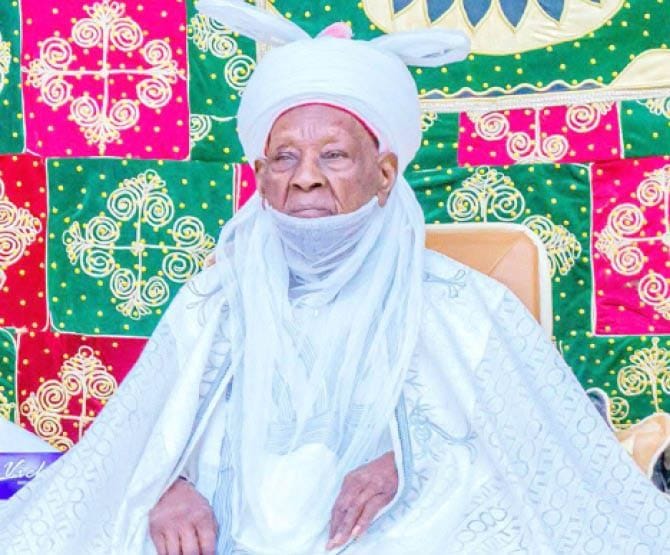
Bala Zango, the state Commissioner for Information and Culture, said the government was taking the allegations seriously. He added that the administration would fully implement the committee’s findings and recommendations. The government did not disclose the committee’s membership or set a deadline for its report.
The allegations came from Mirka Czee, a foreign tourist who visited the emir’s palace in Daura on 14 November. She said she was invited into a private room during the visit, where the monarch allegedly held her hands, hugged her, kissed her cheek and touched her breasts without consent.
Czee said she recorded part of the encounter using Meta smart glasses. She later shared the footage on Instagram after completing her travels in Nigeria. She said the experience left her uncomfortable and shocked.
The Daura Emirate Council had earlier announced that it was reviewing the footage to establish its authenticity and determine whether it had been manipulated. The Katsina State Police Command also said it had not received a formal complaint at the time of its response. The allegation has not been established in court.
The controversy has extended beyond the alleged encounter. Amnesty International Nigeria called for an independent investigation, while former military governor Abubakar Dangiwa Umar urged Governor Radda to suspend the emir pending a transparent inquiry.
Amnesty also raised concern about threats directed at Czee after she made the allegation. These reactions expose another difficulty in addressing sexual violence in Nigeria: survivors can face intimidation, public attacks and pressure to remain silent.
The suspension is an important administrative step, but it is not a finding of guilt. The investigation must establish what happened, examine the available evidence and give all parties a fair opportunity to respond. The emir’s position should not shield him from accountability, just as the allegation should not replace a proper investigation.
The winners from a credible process would be survivors of sexual violence, citizens who expect equal treatment under the law and traditional institutions whose legitimacy depends on public trust. The losers would be anyone who uses authority to obstruct justice or intimidate a complainant. A rushed or compromised investigation, however, would damage confidence in the government and the emirate.
The case also tests the relationship between traditional authority and modern legal accountability. Traditional rulers remain influential in their communities, but their positions do not place them above the law. Katsina must demonstrate that its commitment to justice applies regardless of title or status.
Bottom Line: The suspension is only the first step. Katsina must deliver an independent, transparent investigation that protects the complainant and respects due process.