


The Katsina State Government has approved a 20-megawatt solar power project for 11 critical public facilities. Governor Dikko Radda disclosed this at the 17th regular meeting of the State Executive Council. The project is projected to save the state about ₦7 billion.
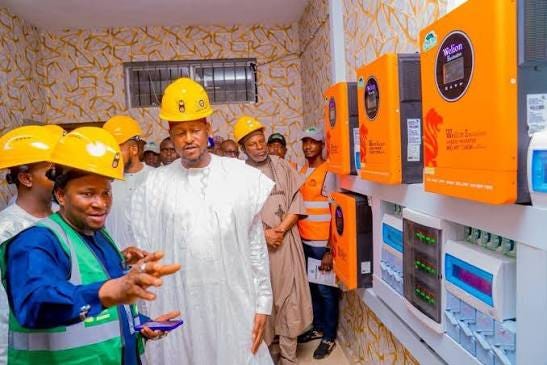
Katsina had zero megawatts of power generation capacity when the Radda administration assumed office. The state relied entirely on the national grid and diesel generators. Grid supply is unreliable. Diesel is expensive. Public institutions spend heavily on both. The state developed an Integrated Resource Plan with Power Africa. The target is 70MW by 2031.
The Special Adviser on Power and Energy, Dr Hafiz Ahmed, said the council approved the procurement and installation of Balance-of-System accessories for Solar PV Inverter and Battery Energy Storage Systems. The 11 facilities include Umaru Musa Yar’Adua University, Hassan Usman Katsina Polytechnic, three waterworks and a booster station, General Amadi Rimi Hospital, Turai Yar’Adua Maternity Hospital, the Katsina State House of Assembly and the Katsina State High Court.
Ahmed said the 11 facilities account for 93.4% of the state government’s total electricity expenditure. The solar intervention would reduce spending on grid electricity and diesel. The savings would equal the investment within about three and a half years. The state has now achieved more than 30MW of generation capacity.
The council approved other measures. A monthly allowance of ₦10,000 for 2,500 youths. A maiden inter-wards grassroots football tournament. External works at Special Model Secondary Schools in Jikamshi and Dumurkul. Recommendations from the Teachers Voice Survey on English proficiency and instructional leadership. A brand-new Caterpillar asphalt paver for the roads maintenance agency. Motorcycles for the 34 local government areas. Hospital renovations in Jibia, Batsari, Ingawa and Bindawa.
Winners: The 11 facilities, which gain reliable power. Taxpayers, if savings materialise. Youths, who gain allowances and sports. Patients, who gain renovated hospitals. Local contractors, who win procurement. Losers: Diesel suppliers, who lose state business. The grid, which loses revenue. Taxpayers, if the solar project underperforms. Critics who see allowances as political spending.
Bottom Line: Katsina is buying 20MW of solar. It will save ₦7 billion. It pays for itself in three and a half years. The state had zero generation capacity. Now it has 30MW. The target is 70MW. Solar is cheaper than diesel. Katsina is proving it.