


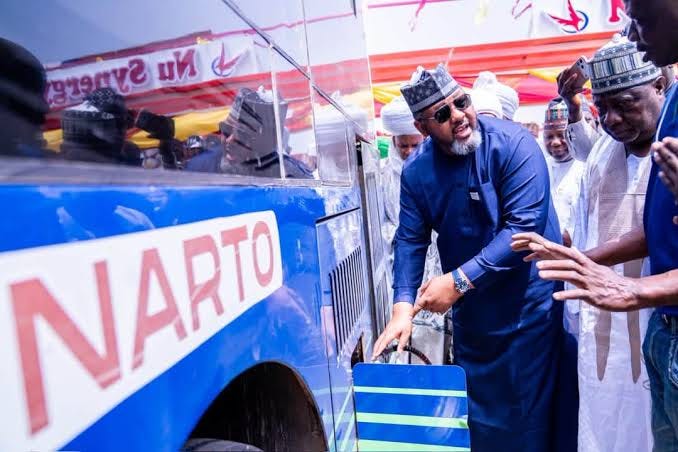
Kano State had virtually no Compressed Natural Gas refuelling stations a year ago. It now has 12. The latest additions came from NU Synergy. The company commissioned two stations and a vehicle conversion centre. The Presidential Compressed Natural Gas and Electric Vehicle Initiative disclosed the expansion.
Nigeria’s CNG push began in earnest after the petrol subsidy was removed in 2023. Pump prices rose above ₦1,400 per litre. The government launched the Presidential CNG Initiative to provide cheaper fuel alternatives. Conversion centres and refuelling stations were prioritised. Kano, as a major commercial hub in the north, was a key target. The Northern Corridor activation programme aims to expand CNG infrastructure across the region. Private investors have driven most of the growth.
The Pi-CNG Executive Chairman, Ismail Ahmed, spoke at the commissioning in Kano. He said the development reflects growing private-sector investment in clean mobility. “The future of transportation belongs to cheaper energy. You cannot achieve that with petrol and diesel,” he said. He noted that Nigeria has over 200 trillion cubic feet of proven gas reserves. “Nigeria is a gas nation, not an oil nation,” he said.
Ahmed recalled that NU Synergy approached the initiative about four months ago. The investor was connected with technical teams for guidance. “Four months later, this is the story,” he said. NU Synergy has established two facilities, one along Zaria Road and another in Mariri along Wudil Road. The new stations combine refuelling with vehicle conversion, allowing motorists to access both services in one location. The development supports the Northern Corridor activation, which seeks to expand CNG infrastructure and conversions across northern Nigeria.
Winners: Kano motorists, who gain cheaper fuel options. NU Synergy, which gains a foothold. The Pi-CNG initiative, which shows results. Transport operators, who can cut fuel costs. The clean energy transition, which gains momentum. Losers: Petrol marketers, who face competition. Diesel suppliers, who lose business. Stations outside Kano, which lag behind. No serious losers if the infrastructure works.
Bottom Line: Kano went from zero to 12 CNG stations in a year. Private investment did most of the work. The stations combine refuelling and conversion. The government provided guidance. The market provided capital. That is the model. If it works in Kano, it can work elsewhere.