


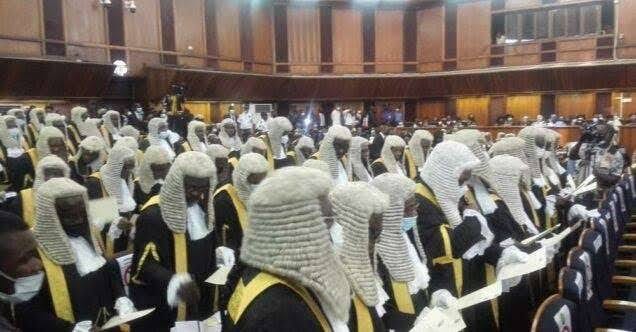
A panel of retired senior jurists has cautioned legal practitioners. The warning targets excessive reliance on generative AI tools for case preparation. The jurists said unverified automated research threatens judicial accuracy. The panel spoke at a legal event. Their concern is practical. AI tools can generate plausible but false citations. Lawyers who fail to verify them risk misleading courts. The consequences include sanctions and loss of credibility.
The legal profession has been slow to adopt technology. In the 1990s, computerised legal research replaced paper indexes. In the 2000s, online databases became standard. Each shift raised concerns about accuracy. AI is different. It does not just retrieve information. It generates it. That generation can be wrong. In 2023, a US lawyer was sanctioned for submitting a brief with fake citations produced by ChatGPT. Similar cases have appeared in the UK and Australia. Nigerian courts have not yet recorded a major AI citation scandal. The jurists want to prevent one.
The panel said AI tools can assist with drafting, summarising and research. They cannot replace verification. A lawyer must check every authority. The jurists noted that AI models can hallucinate cases, statutes and quotations. They can also reproduce outdated law. The panel urged law firms to adopt guidelines. They also urged the Nigerian Bar Association to issue practice directions.
The warning comes as AI adoption grows in Nigeria. Some law firms use AI for document review and contract analysis. Others use it for legal research. The tools are accessible and cheap. The risk is that junior lawyers trust them without checking. The jurists said legal education must include AI literacy. Law schools should teach students how to use AI responsibly and how to verify outputs.
The judicial system depends on trust. If lawyers cite fake cases, judges waste time. If courts rely on unverified AI outputs, judgments suffer. The panel’s warning is timely. It is also insufficient. Guidelines are voluntary. Enforcement requires professional discipline.
Winners: Cautious lawyers, who maintain accuracy. Clients, who receive reliable advice. Courts, which avoid delays. Legal educators, who gain a new curriculum topic. Losers: Over-reliant lawyers, who face sanctions. AI vendors, who face scrutiny. Law firms that cut corners, which risk reputational damage. The profession, if AI misuse erodes trust.
Bottom Line: AI can help lawyers work faster. It cannot replace verification. The jurists are right. A fake citation is a professional death wish. Nigerian lawyers should treat AI as a draft tool, not a final authority.