


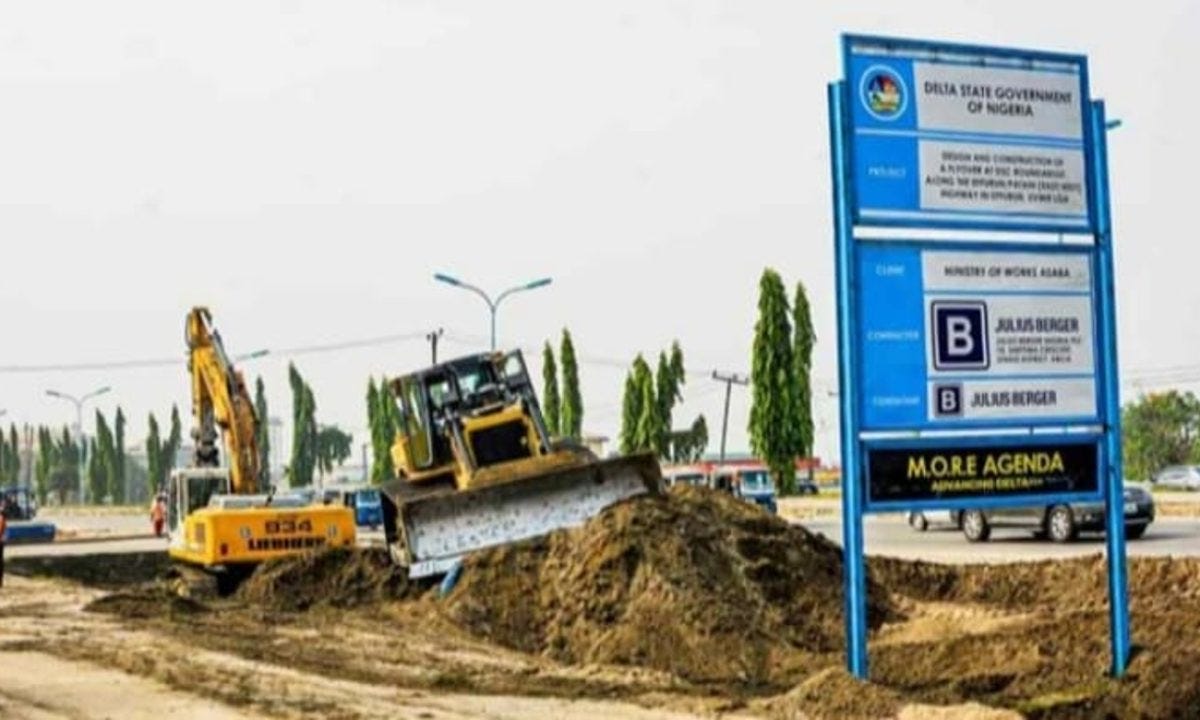
Julius Berger Nigeria Plc has identified regulatory overlap and weak coordination among government agencies, host communities and the private sector as major factors delaying infrastructure projects and undermining the ease of doing business in the country.
The company’s Secretary, Cecilia Ekanem Madueke, spoke at the Nigeria Employers’ Consultative Association (NECA) summit in Abuja during a plenary session on enhancing ease of doing business and addressing regulatory overlap. She said delivering infrastructure requires managing a complex network of stakeholders across the federal, state and local government levels as well as host communities.
“We have the national, the subnational and the local levels. We are dealing with different stakeholders, and it is a complex ecosystem. It is a very delicate task to coordinate all these interests if we are to achieve the ultimate objective, which is the successful delivery of infrastructure,” she said.
Madueke noted that securing approvals for major projects extends beyond regulatory agencies, with decisions at different levels of government and within host communities influencing project timelines. “Approvals go from the national level to the subnational, the local government and even the community. Every one of these levels has an impact on the success of a project,” she added.
She cited the execution of a road project in the South-South, where relocating a shrine became a major issue that required extensive engagement with the host community. “We found ourselves dealing with the relocation of a shrine. That is not something the Federal Government alone can solve. It is not something the state or even the local government can resolve in isolation. It is fundamentally a community issue, and that requires engagement and consensus,” she said.
Madueke explained that infrastructure delivery depends not only on engineering expertise and funding but also on sustained engagement with host communities. “If you do not have the right relationships on the ground and the capacity to engage communities effectively, you will struggle to move projects forward,” she explained.
This mirrors the challenges documented in the 2019 Presidential Enabling Business Environment Council (PEBEC) reports, which identified regulatory duplication as a major barrier to investment. The mechanism was different then, but the result was the same: projects delayed, costs increased, investors frustrated.
The winners: consultants and lawyers who benefit from extended project timelines. The losers: the Nigerian public, who wait for years for infrastructure that never comes, and the economy, which loses billions due to delayed investments.
Bottom Line: Julius Berger says regulatory overlap is delaying projects. The government says it is committed to reform. The roads remain unbuilt.