


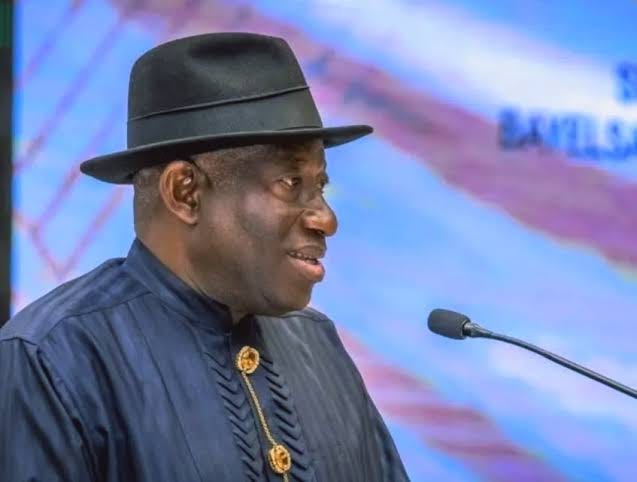
Former President Goodluck Jonathan has warned that rising political intolerance, violence and conflicting court judgments could trigger a crisis after the 2027 general elections. He spoke at a peace and security conference in Abuja on 17 November. He condemned attacks on political candidates and supporters, inflammatory rhetoric and the exploitation of ethnic divisions. He also warned that contradictory judicial decisions could undermine public confidence and encourage lawlessness.
INEC Chairman Joash Amupitan also condemned recent attacks on campaign convoys. He warned that perpetrators face prosecution under the Electoral Act 2026, with fines of up to ₦5 million for individuals and ₦10 million for political parties. Conference participants urged political restraint, judicial independence and stronger electoral safeguards.
The mechanics matter. A warning from a former president carries weight only if the institutions he warns about act on it. The ₦5 million fine for individuals and ₦10 million for parties is a start. It is also small change for a party that can mobilise thugs, disrupt a rally and still spend more on campaign billboards. Fines deter the poor. They rarely deter the powerful.
The reference to conflicting court judgments is the sharpest part of Jonathan’s intervention. Nigeria’s courts have issued contradictory rulings on party leadership repeatedly. The ADC case is live. The PDP’s Ogun dispute was resolved by judicial fiat. When two courts can say different things about the same facts, citizens conclude that outcomes are purchased rather than reasoned. That conclusion is more dangerous than any single judgment.
This mirrors the 2011 post-election violence, when anger over results and perceived rigging produced days of killing. It also echoes the 2019 election, when the postponement and result disputes eroded confidence. The difference now is that the warning comes before the election, not after. That is either foresight or pre-emptive blame-shifting. The distinction depends on what the institutions do next.
The winners are Jonathan, who occupies the moral high ground; conference organisers, who gain gravitas; and the security agencies, who are warned in advance. The losers are the political class, which is being scolded by one of its own; the judiciary, whose independence is being questioned publicly; and ordinary Nigerians, who will bear the consequences if the warnings are ignored. A former president who warns of a crisis has done his part. Preventing it is the work of the institutions that remain in office.
Bottom Line: Jonathan has named the risks. The fines are too small and the courts too inconsistent to prevent them, and only prosecution and coherent rulings will stop 2027 from becoming a crisis.