


Nigeria’s headline inflation rate edged lower to 15.91% in June 2026, compared to 15.93% recorded in May, according to the latest Consumer Price Index report. The June inflation rate was significantly lower than the 25.29% recorded in June 2025, reflecting a continued moderation in headline price growth on a year-on-year basis.
On a month-on-month basis, headline inflation slowed to 1.66% in June, down from 1.75% in May, indicating a slower pace of price increases compared to the previous month. However, food inflation remained elevated, rising to 17.52% year-on-year in June. On a monthly basis, food inflation accelerated to 3.75%, up from 2.98% in May, suggesting renewed pressure on food prices despite the slight moderation in overall inflation.
The divergence between headline and food inflation tells a familiar story. While the overall inflation rate is moderating, food prices continue to rise at an alarming rate. For a minimum-wage earner in Kano, the 17.52% food inflation translates to fewer meals per week, less variety in the diet and increased reliance on cheaper, less nutritious alternatives. For a family of five in Lagos, the acceleration in food inflation means that the weekly food budget now buys significantly less than it did a year ago.
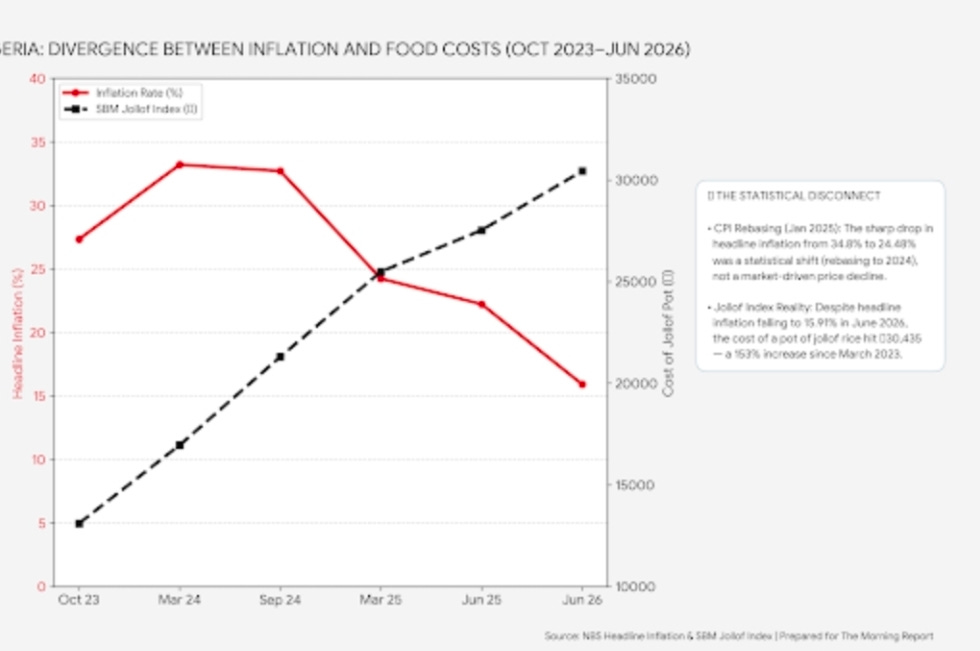
This mirrors the 2016-2017 inflation cycle, when food inflation also outpaced headline inflation, driven by supply chain disruptions and currency depreciation. The mechanism then was different, but the result was the same: households squeezed by rising food prices while overall inflation moderated.
The winners: the Central Bank of Nigeria, which can claim progress in its inflation-fighting efforts; and the Nigerian economy, which is seeing some price stabilisation. The losers: Nigerian households, particularly low-income families, who continue to struggle with rising food prices; and the Nigerian government, which faces pressure to address food insecurity.
Bottom Line: Inflation has eased to 15.91 percent. Food inflation has risen to 17.52 percent. The headline number is improving. The reality on the ground is not.