


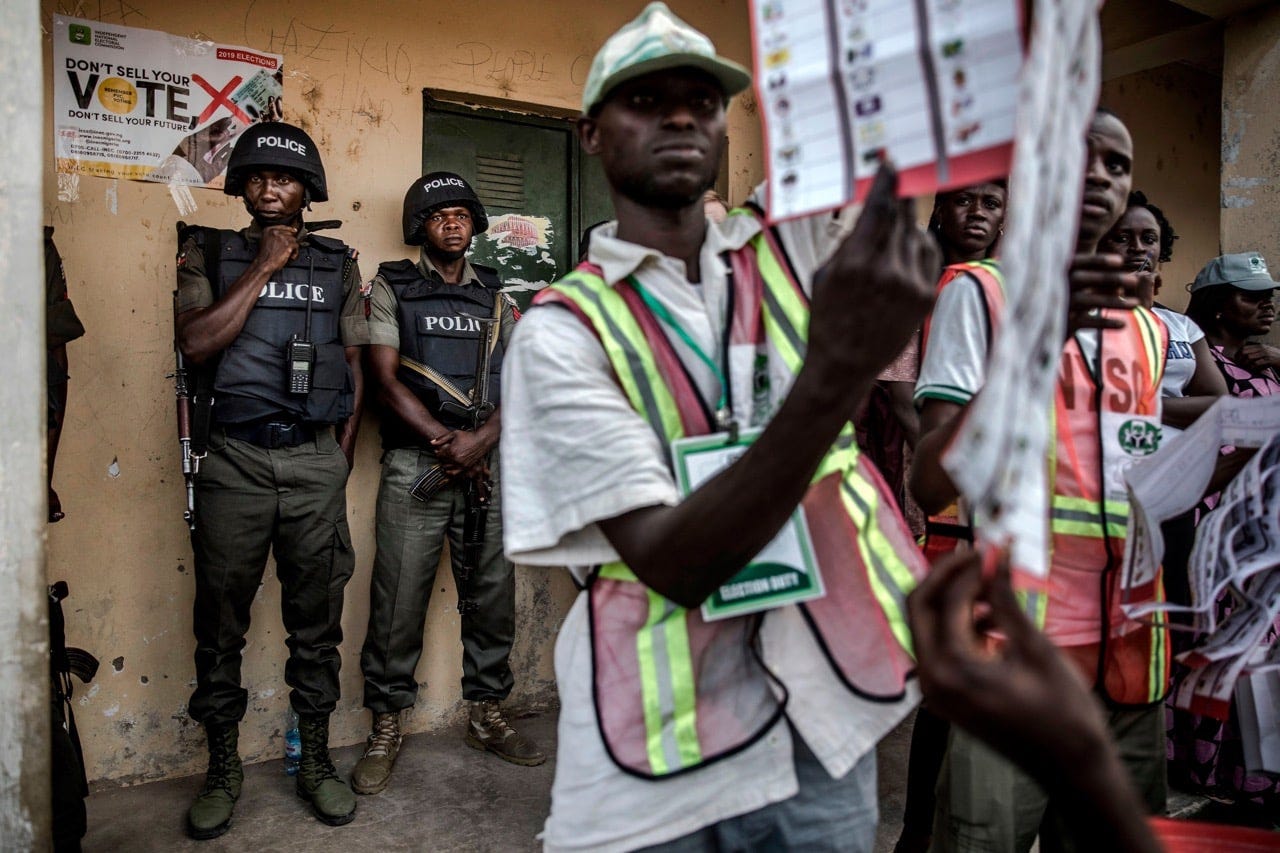
The Independent National Electoral Commission (INEC) reiterated that the Nigeria Police Force remains the constitutionally designated lead agency for election security under the Inter-Agency Consultative Committee on Election Security (ICCES). INEC leadership emphasised that deploying armed forces during elections must remain an exceptional measure reserved solely for high-risk security threats to preserve democratic norms.
The clarification is significant ahead of the Osun governorship election and the 2027 general elections. There have been concerns about the increasing militarisation of elections in Nigeria, with critics arguing that the deployment of armed forces can intimidate voters and undermine democratic processes. INEC’s reaffirmation of the police’s lead role is a commitment to civilian-led election security.
This echoes the 2019 election security debates, which also saw tensions between the police and the military over their respective roles. The mechanism then was different, but the result was the same: a recognition that election security must be civilian-led.
The winners: the Nigeria Police Force, which has been reaffirmed as the lead agency; and Nigerian democracy, which benefits from civilian-led election security. The losers: the military, which may have a reduced role; and the Nigerian public, who must trust the police to secure elections.
Bottom Line: INEC says police lead election security. The military is a last resort. The message is clear: elections must be civilian-led. The question is whether the police can live up to the responsibility.