


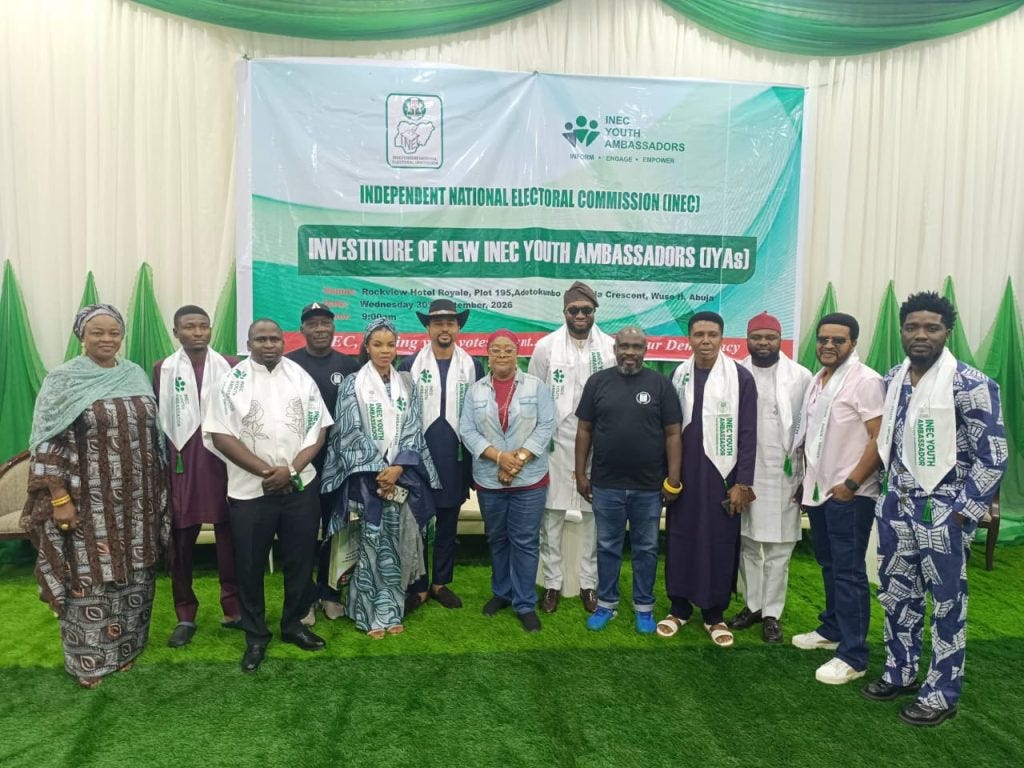
The Independent National Electoral Commission (INEC) has tasked its new Youth Ambassadors with promoting youth sensitisation and peaceful participation in the 2027 general elections. INEC Chairman Joash Amupitan gave the charge on Wednesday in Abuja during their investiture.
Young Nigerians dominate the voter register. INEC’s Continuous Voter Registration data shows that 7.48 million of approximately 10.77 million new registrants, or 69.48%, were aged 18 to 34. That figure was recorded before the Automated Biometric Identification System removed multiple and underage registrations. The youth vote is decisive. It is also vulnerable to manipulation.
Amupitan said young people constitute a significant segment of the population and the majority of registered voters. He cited CVR data. Phase One of the 2026 CVR recorded 2,611,266 newly registered youths. Phase Two recorded 4,110,123. Phase Three recorded 2,602,960. The cumulative total is 9,324,349.
He said the appointment is a deliberate step towards strengthening the relationship between INEC and young citizens. “Young people are more likely to engage with electoral information when communicated through credible, relatable and influential voices within their communities,” he said. He urged the ambassadors to uphold integrity, impartiality, inclusiveness and responsible citizenship. He said they must promote participation without partisan bias.
Professor Kunle Ajayi, INEC National Commissioner and Chairman of the Board of the Electoral Institute, said numbers alone are insufficient. “The question is not only how many young Nigerians are registered to vote, but how many understand their rights and responsibilities,” he said. He cautioned against the manipulation of young people for electoral violence. “Political competition should never require young Nigerians to fight, destroy, or kill one another.” He urged them to adopt the principle: “Verify before you amplify.”
The ambassadors are Alex Ibeh, Emmanuel Ikubese, Mike Goodson, Christopher Yohanna, Amal Umar, Seun Ajayi, Thompson Ukeki, Ibrahim Bello and Sunday Agbaji.
Winners: The ambassadors, who gain platforms. INEC, which gains youth reach. Young voters, who gain relatable messengers. Losers: Misinformation networks, which face counter-messaging. Politicians who exploit youth for violence. Critics who see the ambassadors as tokenistic.
Bottom Line: Nine ambassadors. Nine million new youth registrants. INEC wants peaceful participation. It wants verified information. Youth are the majority. They can shape 2027. They can also be manipulated. The ambassadors have a job.