


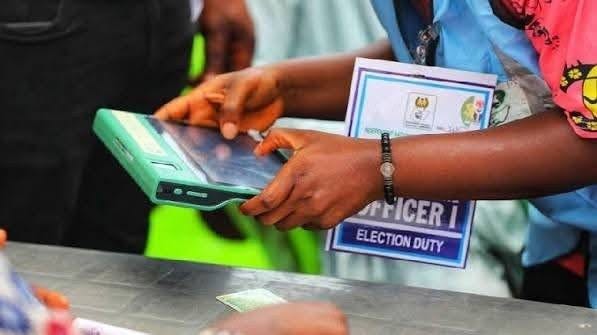
INEC has deployed roughly 75% to 80% of its Bimodal Voter Accreditation System (BVAS) machines, totalling 186,277 units, to state offices, with the remaining materials due by the end of November. The commission has also fixed 28 November 2026 for a nationwide mock accreditation and voting exercise to simulate the presidential election. Chairman Joash Amupitan said the exercise will test upgraded BVAS devices, electronic result transmission and new safeguards designed to stop inaccurate polling-unit results from reaching the IReV portal. INEC has reduced the maximum number of voters per BVAS machine from 1,250 to 850.
The mechanics matter more than the logistics. Moving 186,277 devices to state offices is an exercise in warehousing. The harder problem is what happens when those devices reach a polling unit in a rural ward with no power, no network and a presiding officer under pressure. INEC says it is building climate-controlled storage to protect the machines from heat, which is an admission that the 2023 failures were partly a hardware problem. But the commission also admits that the core weakness was at collation centres, not polling units. A machine that accredits correctly cannot fix a result that is altered after accreditation.
This echoes the 2023 cycle, when BVAS and IReV were rolled out as transparency tools and then became the focus of disputes over what they did and did not transmit. It also mirrors the 2019 experience, when the commission’s server failures became a political issue in their own right.
The winners are the state offices that receive the machines early, and the political parties that will use the mock exercise to test their own turnout operations. The losers are the voters in underserved areas who will discover on election day that a device is only as good as the officer holding it, and the commission itself if the mock exercise exposes the same gaps as 2023.
Bottom Line: Moving machines is logistics. Restoring trust is politics, and INEC cannot warehouse its way out of that.