


Hundreds of farmers have returned to Kumalia, an abandoned community in Borno State, after ISWAP terrorists banned farming across parts of northern Borno. The community, located within Monguno Local Government Area, was emptied by the Boko Haram insurgency in 2016. The government never formally reopened it.
The warning came in February at the onset of cultivation. Farmers across parts of northern Borno began receiving messages from ISWAP terrorists not to farm this season. “They approached farmers who had gone to Kartari and told them we must not cultivate this year,” said Musa Abubakar, a farmer from Cross Kauwa. “They also informed community leaders in villages close to them, and those leaders passed the message to us in other towns.”
Farmers who wished to cultivate were instructed to relocate with their families to terror-controlled territories, locally known as Daula, and farm there instead. Many initially assumed it was another extortion attempt. For years, cultivating in parts of northern Borno had meant paying terror groups for access to land. In 2024, HumAngle documented how farmers in the region paid millions of naira in levies and so-called farming permits to ISWAP. This season, farmers pooled their money together, some contributing at least ₦50,000 each, hoping to negotiate their way back to their fields. The effort failed.
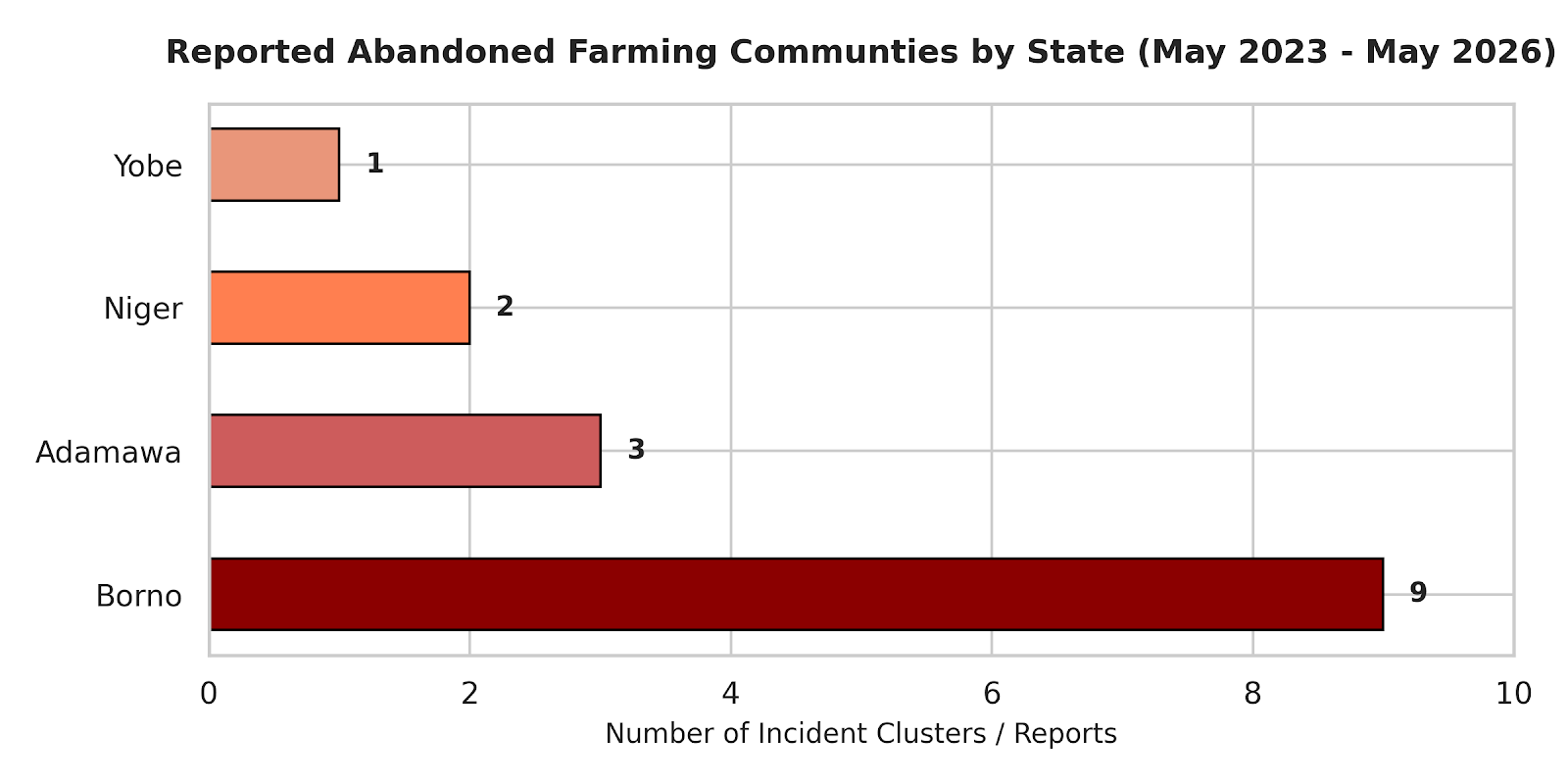
So they began looking elsewhere. More than 100 farmers from Monguno relocated to Kumalia, where they erected makeshift shelters from sticks and dry grass to plant their crops. They plan to stay until the harvest season in November or December. Women and children joined them. “My sister is there,” said Kaka Ali, a 30-year-old father of two. “Many women went with their children. The older ones trekked with their parents. The younger ones are carried on their backs.”
The risks are real. On June 20, suspected ISWAP terrorists killed four farmers working near Kartari. Twelve other farmers were also killed in the incident. That same day, in Zabarmari, another 11 farmers were reportedly killed. The men had travelled to Kartari from different parts of northern Borno, drawn by the search for land to cultivate after farming had been disrupted closer to home.
The winners: none. The losers: farmers who risk their lives to feed their families, and a Nigerian state that cannot protect its citizens from terrorists who dictate where and when they can farm.
Bottom Line: Farmers are returning to abandoned communities because terrorists have banned farming elsewhere. That is not a solution. It is a survival strategy.