


The price of 24-karat gold in Nigeria has fallen below ₦170,000 per gram, trading at about ₦168,500 in Lagos retail spot markets. The local decline tracks a global sell-off. Spot gold cracked the $3,800 range on Wednesday, touching its lowest level in more than a year, as a firm dollar and rising US Treasury yields pulled capital out of non-yielding assets. Silver fell beneath $46 per troy ounce. The immediate trigger is the US Federal Reserve. Markets now price a 95.7% chance of a 25 basis point hike in December, and Fed officials have publicly argued for more tightening to contain inflation.
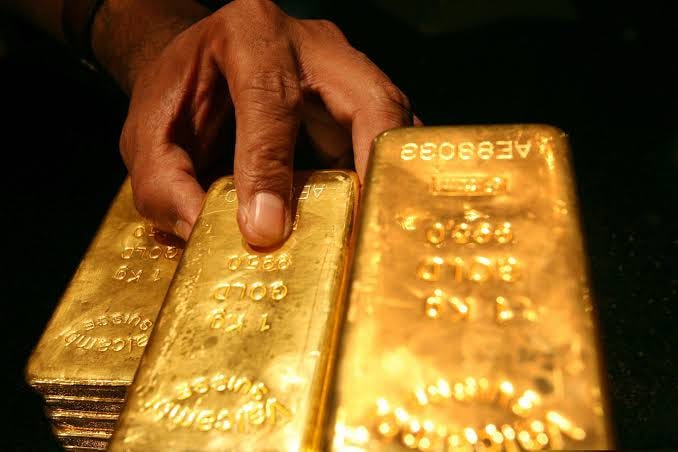
The mechanics are simple. Gold pays no interest. When US rates rise, the dollar strengthens, and bullion becomes more expensive for holders of other currencies. Nigerian buyers feel that twice over, through the dollar price and through the naira’s own weakness. Gold’s local appeal has rested on its reputation as a hedge against naira depreciation and food inflation. That reputation is now being tested by a force Nigerian savers cannot control: the Federal Reserve’s inflation fight.
This mirrors the 2013 taper tantrum, when emerging market assets sold off sharply as US yields spiked. The difference is that Nigeria’s inflation is now structurally higher, and the naira has already lost much of the value that made gold attractive in the first place.
The winners are dollar holders, importers paying in stronger currency, and anyone who sold gold near the recent peak. The losers are small savers who bought bars and coins as a store of value, jewellers holding inventory, and artisanal miners paid in a falling local price.
Bottom Line: Gold was never a Nigerian hedge against Nigerian risk. It was a bet on the dollar, and the dollar is now doing what the dollar does.