


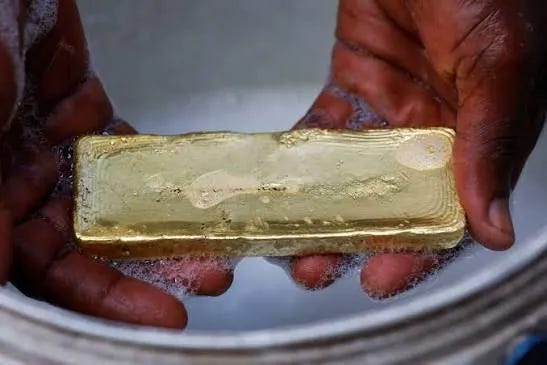
Ghana’s exports to South Africa were almost entirely driven by gold in the first quarter of 2026, highlighting the country’s dependence on the precious metal in trade with one of its biggest African markets. Data from the Ghana Statistical Service showed that South Africa received GH¢14.1 billion worth of Ghanaian goods during the quarter, representing 66.9% of Ghana’s total exports to Africa. Gold accounted for 99.9% of those exports.
Côte d’Ivoire and Burkina Faso followed as Ghana’s largest African export destinations, accounting for 11.8% and 8.0%, respectively. Togo and Nigeria represented 2.9% and 1.7%. Ghana exported GH¢21 billion worth of goods to Africa, against imports of GH¢8.7 billion. The country has recorded a trade surplus with Africa since the fourth quarter of 2024, reaching its highest level in Q1 2026.
The Nigerian stake is clear. Ghana’s export concentration in gold is a reminder of the risks of relying on a single commodity. Nigeria has its own dependence on oil, and the Ghanaian example offers lessons on the need for diversification.
From a Nigerian vantage point, Ghana’s trade surplus with Africa is a positive sign for regional integration. However, the concentration of exports in gold highlights the vulnerability of Ghana’s economy to price fluctuations.
The winners: Ghana, which has recorded a trade surplus; and the Ghanaian economy, which benefits from gold exports. The losers: Nigeria, which has a smaller share of Ghana’s exports; and the Nigerian government, which must learn from Ghana’s experience.
Bottom Line: Gold drives Ghana’s exports to South Africa. The concentration is a vulnerability. The question is whether Ghana can diversify its export base or remain dependent on gold.