


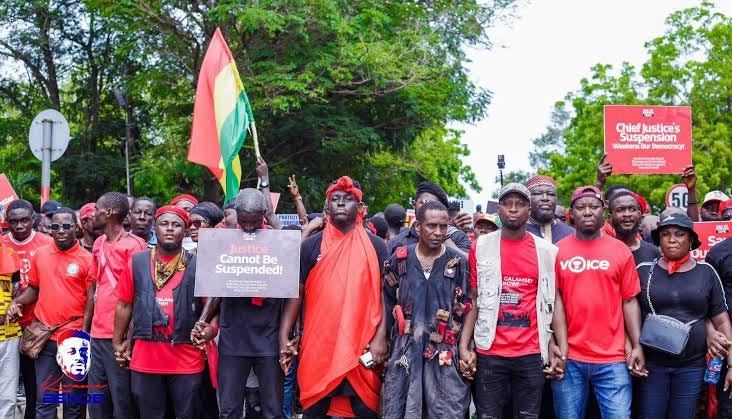
Ghana’s opposition New Patriotic Party (NPP) has announced a nationwide protest tagged “Democracy Under Attack” for Thursday, August 6, 2026, citing concerns over what it describes as threats to the country’s democratic governance. The demonstration is scheduled to begin at 6:00 a.m. at the Supreme Court and end at Jubilee House.
NPP spokesperson Dennis Miracles Aboagye said the protest is aimed at resisting alleged attempts by the government to suppress dissent and weaken democratic institutions. He accused the authorities of arresting opposition figures, media practitioners and social media users, weaponising bail conditions and fostering an unhealthy relationship between the executive and judiciary. Aboagye called for equal treatment under the law and urged the government to respect civil liberties and democratic accountability.
The government has denied targeting political opponents, insisting that law enforcement agencies and the judiciary operate independently and that arrests and prosecutions are carried out in accordance with the law. The protest represents a significant escalation in Ghana’s political tensions, with the opposition accusing the government of undermining democratic norms while the government maintains it is simply enforcing the law.
The Nigerian stake is clear. Ghana has long been considered one of West Africa’s most stable democracies, and the protest is a test of the resilience of its democratic institutions. If the protest turns violent or the government responds heavy-handedly, it could undermine Ghana’s reputation as a regional model. Nigeria, as a neighbouring country and regional power, has a vested interest in Ghana’s stability.
From a Nigerian vantage point, the protest is a reminder of the fragility of democracy in the region. The allegations of government suppression of dissent, the weaponisation of bail conditions and the strained relationship between the executive and judiciary resonate with concerns that have been raised in Nigeria. The NPP’s protest is a warning that the democratic gains of the past decades are not irreversible.
This echoes the 2020 post-election protests in Ghana, which also saw the opposition challenge the government’s legitimacy. The mechanism then was different, but the result was the same: a test of Ghana’s democratic institutions.
The winners: the NPP, which has successfully framed the protest as a defence of democracy; and the Ghanaian public, who have a platform to voice their concerns. The losers: the Ghanaian government, which faces a legitimacy challenge; and the Ghanaian economy, which could suffer if the protests escalate into violence.
Bottom Line: Ghana’s opposition is taking to the streets over democracy concerns. The government denies the allegations. The question is whether the protest will be peaceful or spiral into violence.