


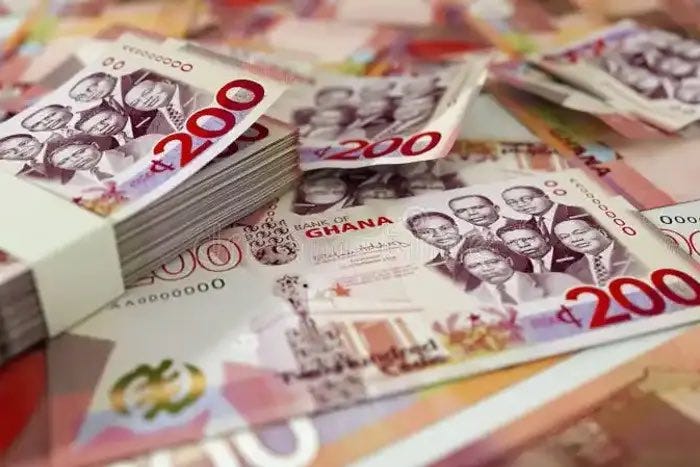
Ghana’s broad money supply (M2+) grew by 22.2% year-on-year in April 2026, slowing from 26.7% recorded in the same period last year, according to the Bank of Ghana’s May 2026 Monetary Policy Report. The central bank said the moderation reflects slower liquidity growth, largely driven by a sharp decline in the contribution of Net Foreign Assets (NFA).
NFA contributed a negative 5.2% to money supply growth in April 2026, compared with a positive 36.1% a year earlier, mainly due to the appreciation of the cedi, which reduced the local-currency value of foreign assets, and weaker foreign asset accumulation by banks. Despite this, stronger growth in Net Domestic Assets (NDA) helped cushion the slowdown. NDA contributed 27.4% to money supply growth, up from negative 9.4% in April 2025, supported by higher net claims on the government, increased banking sector holdings of government securities, other net items, and stronger lending to the private sector.
The Nigerian stake is clear. Ghana’s monetary dynamics are closely watched in Nigeria, as both countries share similar economic structures and face similar challenges. The appreciation of the cedi is a positive development for Ghana, but the slowdown in money supply growth reflects the broader challenges of managing liquidity in a volatile global environment.
From a Nigerian vantage point, Ghana’s experience is a reminder of the importance of exchange rate stability. Nigeria’s own naira has been under pressure, and the Central Bank has struggled to manage money supply growth while maintaining exchange rate stability. Ghana’s success in stabilising its currency offers lessons that Nigeria could learn from.
This mirrors the 2019 monetary policy tightening in Ghana, which also slowed money supply growth and stabilised the currency. The mechanism was different, but the result was the same: a central bank using monetary tools to manage inflation and exchange-rate pressures.
The winners: Ghana’s central bank, which has successfully managed money supply growth; the cedi, which has appreciated; and Ghana’s economy, which benefits from stability. The losers: businesses that rely on easy credit, and the Nigerian economy, which has not achieved the same stability.
Bottom Line: Ghana’s money supply growth is slowing. The cedi is appreciating. Nigeria is watching. The question is whether Nigeria can replicate Ghana’s success.