


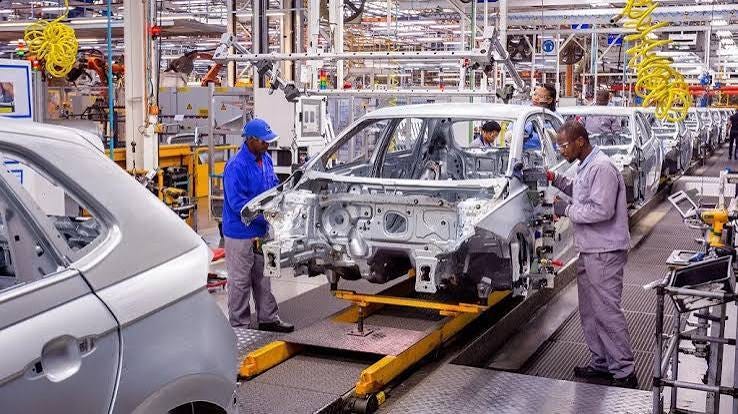
Ghana’s vehicle assemblers will need to meet a minimum local assembly threshold to qualify for VAT exemptions. President John Dramani Mahama announced the policy. He spoke at the commissioning of Phase Three of the Zonda Tech Ghana Vehicle Assembly Plant at Tema Golf City. He said the Ministries of Finance and Trade and Industry are finalising an incentive framework for semi-knockdown vehicle assembly. The goal is to stop companies claiming credit for minor work on near-complete imports.
Ghana has a small automotive assembly industry. Companies like Kantanka and Zonda Tech assemble vehicles from imported kits. In 2020, Ghana introduced a tax incentive for vehicle assemblers. But some companies exploited it. They did minimal work on near-complete imports and claimed the exemption. Mahama wants to fix that. He urged assemblers to invest in local production of batteries, tyres, wiring harnesses, seats, glass and metal parts. He said this would strengthen supply chains and create jobs. Ghana hosts the African Continental Free Trade Area (AfCFTA) secretariat. It wants to supply a market of over 1.4 billion people.
Details of the new framework will appear in the budget before Parliament. Mahama said assembly should not be the industry’s final destination. The policy aims to deepen local content. For Nigeria, Ghana’s move is instructive. Nigeria has its own automotive policy. It offers incentives for local assembly. Enforcement has been weak. Some Nigerian assemblers also do minimal work on imported kits. Ghana’s threshold could pressure Nigeria to tighten its own rules. The two countries compete for the same regional market. A more credible Ghanaian industry would attract investment. Nigeria would need to respond.
Winners: Ghanaian assemblers who meet the threshold. Local parts manufacturers. Workers in the automotive supply chain. The Ghanaian government, which gains tax revenue and industrial credibility. Losers: Assemblers who relied on minor work. Importers of near-complete vehicles. Consumers, if prices rise. Nigerian assemblers, who face competition from a more credible Ghanaian industry.
Bottom Line: Ghana is tightening its vehicle assembly rules. Nigeria should watch. A policy that rewards real assembly is better than one that rewards paperwork.