


Ghana’s Ambassador to the United States, Victor Smith, said negotiations with Boeing to establish a new national airline are nearing completion. He spoke to JoyNews. The government is still seeking investors to support the project. Financing, ownership structure and operational model remain undisclosed, and no timeline has been given for signing the agreement or launching flights.
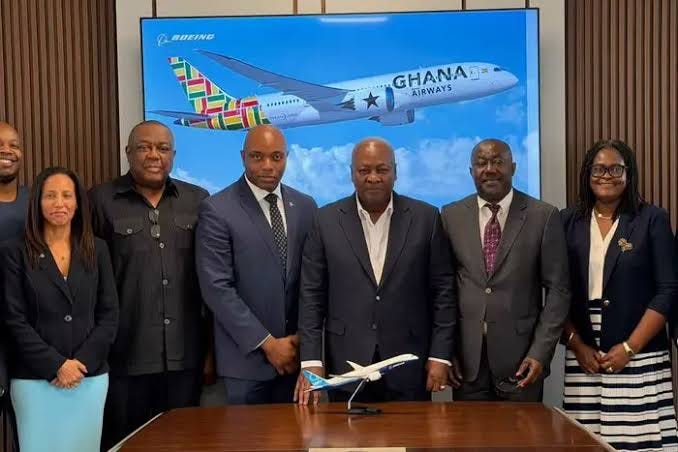
The history explains the caution. Ghana Airways collapsed in 2004. Ghana International Airlines ceased operations in 2010. Two carriers, two failures, and 16 years without a flag on the tail. Successive administrations have tried to restart the project through international partnerships, and each attempt has stalled at the same place: who pays, and who owns.
An aircraft order is the easy part. Boeing will sell aircraft to a credible buyer with a deposit and a business plan. The hard part is the route network, the maintenance contract, the crew pipeline and the working capital that carries an airline through its first three unprofitable years. Ambassador Smith’s comments cover the aircraft and the identity, and leave the rest unstated. That is not a criticism of the man. It is the shape of every airline announcement on the continent.
From a Nigerian vantage point, the parallel is close and unflattering. Nigeria Airways folded in 2003. Nigeria Air was unveiled in 2023 and suspended within months, leaving a branded aircraft and an unresolved ownership dispute. Ethiopian Airlines, which was approached for both projects, built its carrier over decades with state backing and a disciplined maintenance base. Neither Ghana nor Nigeria has reproduced that combination, because both tried to buy an airline instead of building one.
There is a regional stake here too. A functioning Ghanaian carrier would compete on the West Coast routes where Lagos traffic is thickest, and would give Ghanaian travellers an alternative to connecting through Addis Ababa, Casablanca or Istanbul. That is good for passengers and unwelcome for incumbents. It also raises the question that Abuja should be asking. If Accra can restart a carrier with a Boeing order, why has Nigeria’s attempt ended in a hangar?
What should Ghana do next, and what should Nigerian carriers watch? Three things matter more than the Boeing signature. A named equity partner with aviation experience. A maintenance arrangement, since unplanned engine work is where small carriers die. And traffic rights secured before launch, not after. Until those appear, the announcement is an intention.
Winners: Boeing, if the order firms up. Ghana’s aviation identity, if the project flies. Regional travellers, if fares fall. Losers: Foreign carriers that currently capture Ghanaian transfer traffic. Ghanaian taxpayers, if the state carries the risk without a controlling stake.
Bottom Line: The Boeing talks are the easy half. Until Ghana names its equity partner and its maintenance base, the flag will stay on the drawing board.