


Ghana has made an early payment of about $700 million to Eurobond holders, reinforcing its commitment to meeting external debt obligations under its debt restructuring programme. The payment, made on Thursday, included $525.2 million in principal and $174.8 million in interest. With the latest settlement, Ghana has paid a total of $2.1 billion to Eurobond investors since January 2025 under the Eurobond Debt Exchange Programme.
Officials said the payment was financed through planned arrangements that avoided significant pressure on the country’s foreign exchange reserves. The government said the move forms part of efforts to manage its external debt in an orderly and sustainable manner. The latest settlement is expected to reduce Ghana’s outstanding Eurobond debt and boost investor confidence in the country’s debt management strategy.
Authorities also reaffirmed their commitment to prudent fiscal management, saying timely debt servicing remains key to preserving macroeconomic stability and strengthening confidence in the economy. “We are demonstrating that Ghana is serious about meeting its obligations. This builds trust with our creditors and sends a strong signal to international markets,” a finance ministry official said.
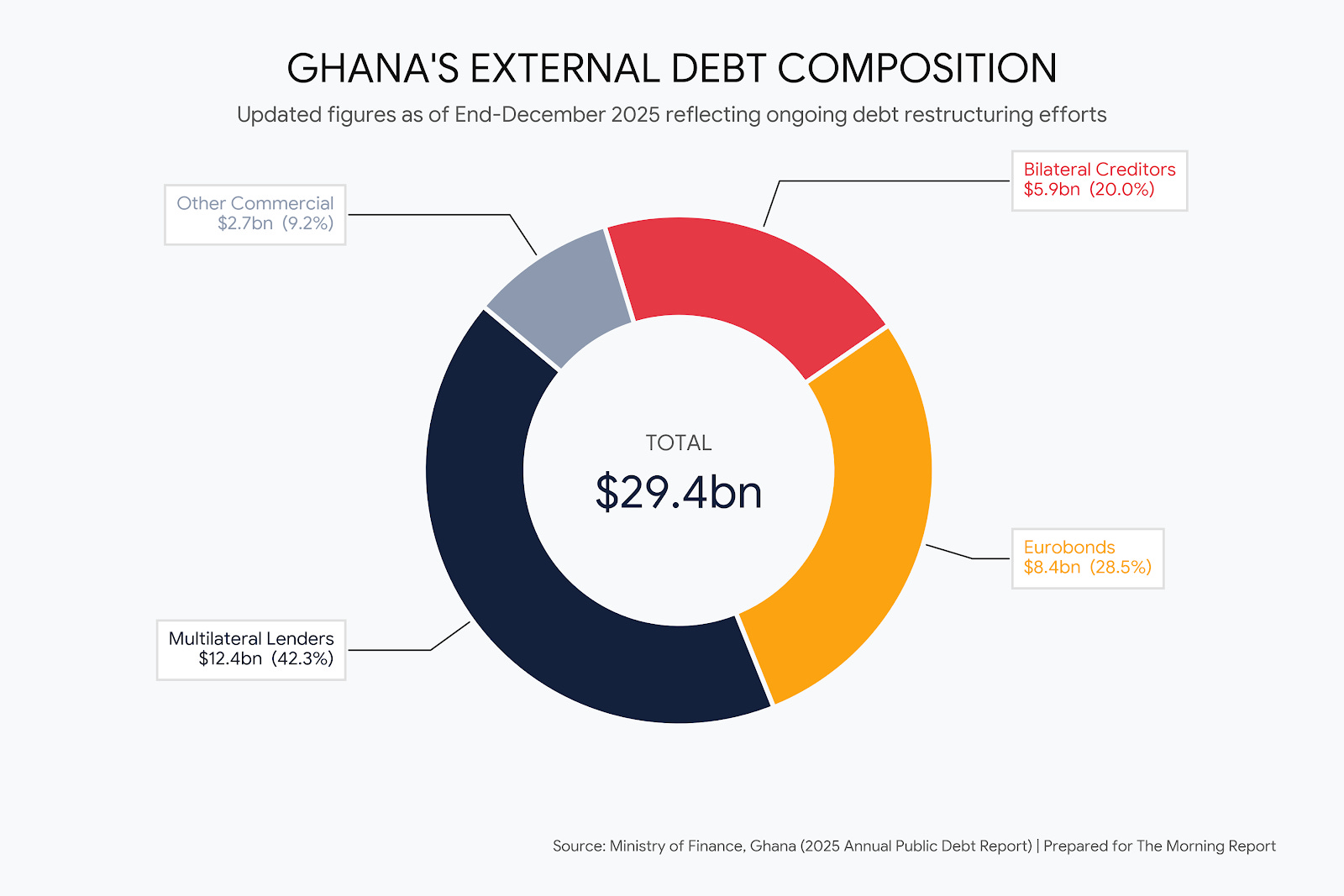
The Nigerian stake is clear. Ghana’s success in restructuring its debt and making early payments sets a positive example for the region and could encourage investment flows into West Africa. However, it also highlights Nigeria’s own debt challenges. Nigeria’s debt-to-GDP ratio is lower, but its debt service-to-revenue ratio is much higher, with over 90 percent of government revenue going to debt service. Ghana’s early payment suggests it is managing its debt burden more effectively than Nigeria is managing its own.
This mirrors the 2005 debt relief era, when Nigeria and Ghana both benefited from international debt forgiveness. The mechanism was different then, but the result was the same: Ghana is moving forward while Nigeria remains stuck.
From a Nigerian vantage point, Ghana’s payment is a reminder that Nigeria’s own debt management strategy is less disciplined. Ghana is paying early. Nigeria is borrowing more. The contrast is stark.
The winners: Ghana’s creditors, who received their payments; Ghana’s government, which has boosted its credibility; and Ghana’s economy, which benefits from increased investor confidence. The losers: Nigeria, which is not keeping pace with its West African neighbour, and Ghanaian taxpayers, who ultimately bear the cost of the debt.
Bottom Line: Ghana is paying its debts early. Nigeria is still struggling to pay its bills. The gap between the two countries is widening.