


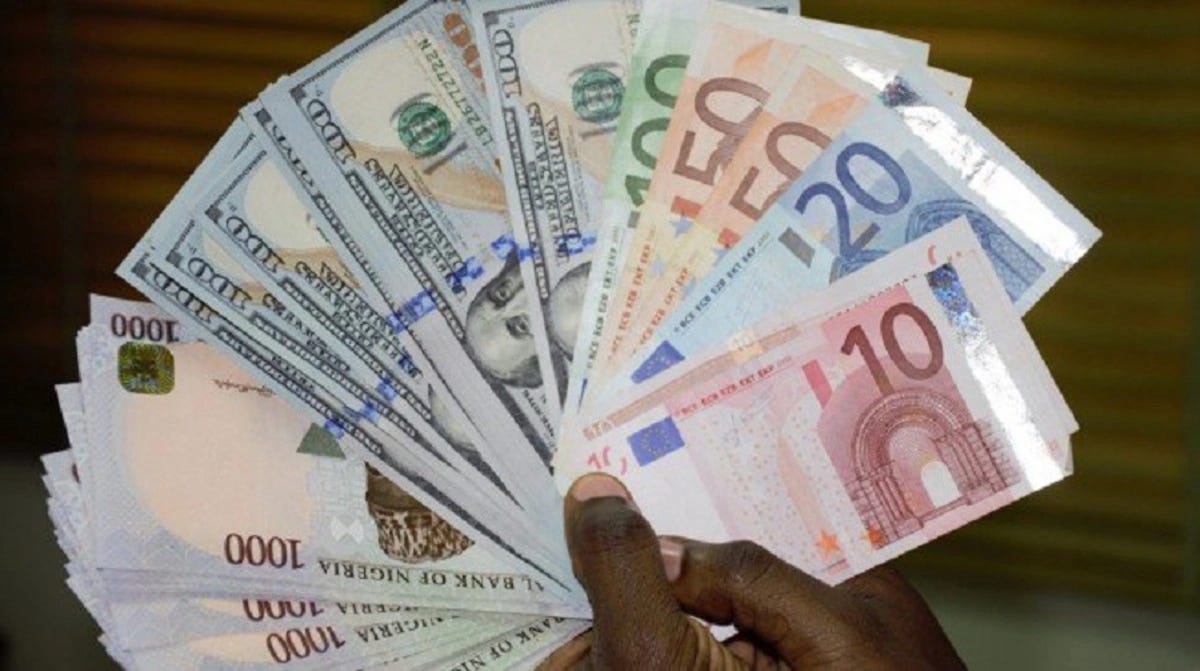
The value of dollars traded in Nigeria’s foreign exchange market fell 22.23% to $2.62 billion in the week ended 16 October 2026. It was $3.37 billion the previous week. Spot trading slowed. Forward transactions dropped sharply. Total trading fell by $749.15 million. The decline reverses part of the 98.58% jump recorded in the week ended 9 October.
Nigeria’s FX market has been volatile since the 2023 liberalisation. Turnover swung widely as the Central Bank of Nigeria (CBN) cleared backlogs and foreign investors returned. Forward contracts allow businesses to lock in exchange rates for future transactions. They are a measure of confidence. When forwards collapse, it signals uncertainty or a shift to spot transactions. The CBN has intervened repeatedly to stabilise the naira. The current data shows intervention is working, but volumes are shrinking.
Forward transactions fell 81.14% to $24.89 million from $131.95 million. They accounted for 0.95% of total turnover, down from 3.92%. Average daily forward trading dropped to $4.98 million from $26.39 million. Forward trades have swung widely. They fell to $64.73 million in the week ended 2 October, rose to $131.95 million, then fell to $24.89 million. The figure measures contracts executed during the week, not outstanding obligations.
Spot transactions, which involve near-immediate delivery, fell 19.83% to $2.60 billion from $3.24 billion. That is a decline of $642.09 million. Spot trading accounted for 99.05% of turnover, up from 96.08%. Average daily spot turnover fell to $519.16 million from $647.58 million. Average daily turnover for the whole market fell 22.23% to $524.14 million from $673.97 million.
The naira appreciated across forward contract tenors despite the turnover drop. It gained 1 basis point in the 1-month contract to ₦1,352.89/. It gained 8 basis points in the 3-month contract to ₦ 1,370.80/. It gained 22 basis points in the 6-month contract to ₦1,436.75/. It gained 65 basis points in the 1-year contract to ₦ 1,531.01/. In the spot market, the local currency depreciated 0.1% week-on-week to ₦1,333.09/$. Renewed domestic demand outweighed the CBN’s $430.60 million intervention.
Foreign exchange demand hit a 15-year high of $18.34 billion in the second quarter of 2026. Demand for dollars is rising in services and financial payments. Cordros Securities expects the naira to remain broadly stable near current levels. It cited a strong foreign reserve position and a continued current account surplus. It warned of downside risks from lower domestic yields and tighter global financial conditions.
Winners: The CBN, which intervened successfully to support the naira. Importers who locked in forward rates, if they secured favourable terms. The Federal Government, which gains from a stable currency. Foreign investors, who gain predictability. Losers: Bureaucrats who profit from FX arbitrage, if spreads narrow. Forward traders who missed the appreciation. Exporters, if the naira strengthens too fast. The market, which loses liquidity as volumes shrink. Businesses that need forward contracts but face limited counterparties. The economy, if reduced turnover signals declining confidence.
Bottom Line: Turnover fell 22%. Forwards collapsed 81%. Spot trading fell 20%. Yet the naira appreciated in forwards. That is the paradox. The CBN is intervening. Demand is rising. The market is shrinking. A stable currency on low volume is not a victory. It is a pause. Nigeria needs deeper liquidity, not just a managed rate. The naira can hold, but the market must grow.