


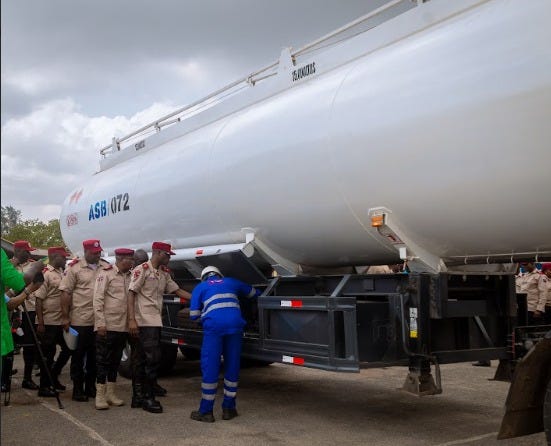
The Federal Road Safety Corps has identified four persistent violations among petroleum tanker drivers. They are speeding, driver fatigue, overloading and driving against traffic. The FRSC spokesman, Osondu Ohaeri, disclosed this on Sunday in Abuja. He warned that the practices continue to threaten road safety despite enforcement efforts.
Petroleum tanker accidents are a recurring tragedy in Nigeria. In 2018, a tanker explosion on Otedola Bridge in Lagos killed over 60 people. In 2020, an explosion at Abule-Ado killed more than 20. In 2024, multiple tanker crashes blocked highways. The causes are consistent: speed, fatigue, overloading and poor maintenance. The FRSC has issued warnings before. Enforcement has been uneven. The tanker drivers face pressure from operators to meet delivery schedules. That pressure translates into dangerous driving.
Ohaeri described the violations in detail. He said some drivers exceed speed limits to meet schedules. He said bringing a loaded tanker to a safe stop is difficult. He said fatigue is a major risk. Some drivers travel from Kano to Lagos overnight without adequate rest. “Driving while fatigued could impair concentration and reaction time, increasing the likelihood of losing control,” he said. He also identified driving against traffic as a serious violation.
He said some operators overload vehicles. Others carry additional goods alongside petroleum products. That compromises stability. The FRSC has intensified safety education and enforcement. It has engaged operators and stakeholders. It has achieved about 75% success in issuing Class G licences to relevant operators. That means drivers have the required qualifications.
Ohaeri urged tanker drivers to prioritise safety over schedules. He warned that violations involving flammable products could have devastating consequences. He called for discipline, rest, maintenance and speed compliance.
The warnings are necessary. Tankers carry highly flammable cargo. A crash can kill dozens. The FRSC can educate and enforce. It cannot eliminate the economic pressure that drives the behaviour. Operators must change their incentives. Until they do, the warnings will continue.
Winners: The FRSC, which shows vigilance. Compliant drivers, who gain safer roads. The public, if enforcement works. Losers: Reckless drivers, who face sanctions. Overloading operators, who face scrutiny. Motorists, who share the road with dangerous tankers. The victims of past crashes, whose deaths are repeated.
Bottom Line: Four violations. One warning. The FRSC is watching. The tankers are still dangerous. Compliance is the only solution.