


Four civil society organisations have filed a lawsuit in France against TotalEnergies, seeking access to documents related to the energy giant’s planned sale of its onshore oil assets in Nigeria’s Niger Delta. Friends of the Earth France, Hawkmoth, HEDA Resource Centre and Social Action International announced the legal action on Wednesday. They are asking a French court to compel TotalEnergies to disclose the terms of the proposed sale of its stake in the Renaissance joint venture.
The groups are acting under Article 145 of the French Code of Civil Procedure, which allows parties to seek court-ordered evidence preservation before filing a substantive lawsuit. The transaction has been conducted with little public disclosure, leaving unanswered questions about who will be responsible for remediating polluted sites and compensating communities affected by decades of oil exploration in the Niger Delta. The requested documents would determine whether TotalEnergies has complied with France’s Duty of Vigilance Law, which requires large companies to identify and prevent serious human rights and environmental risks linked to their operations.
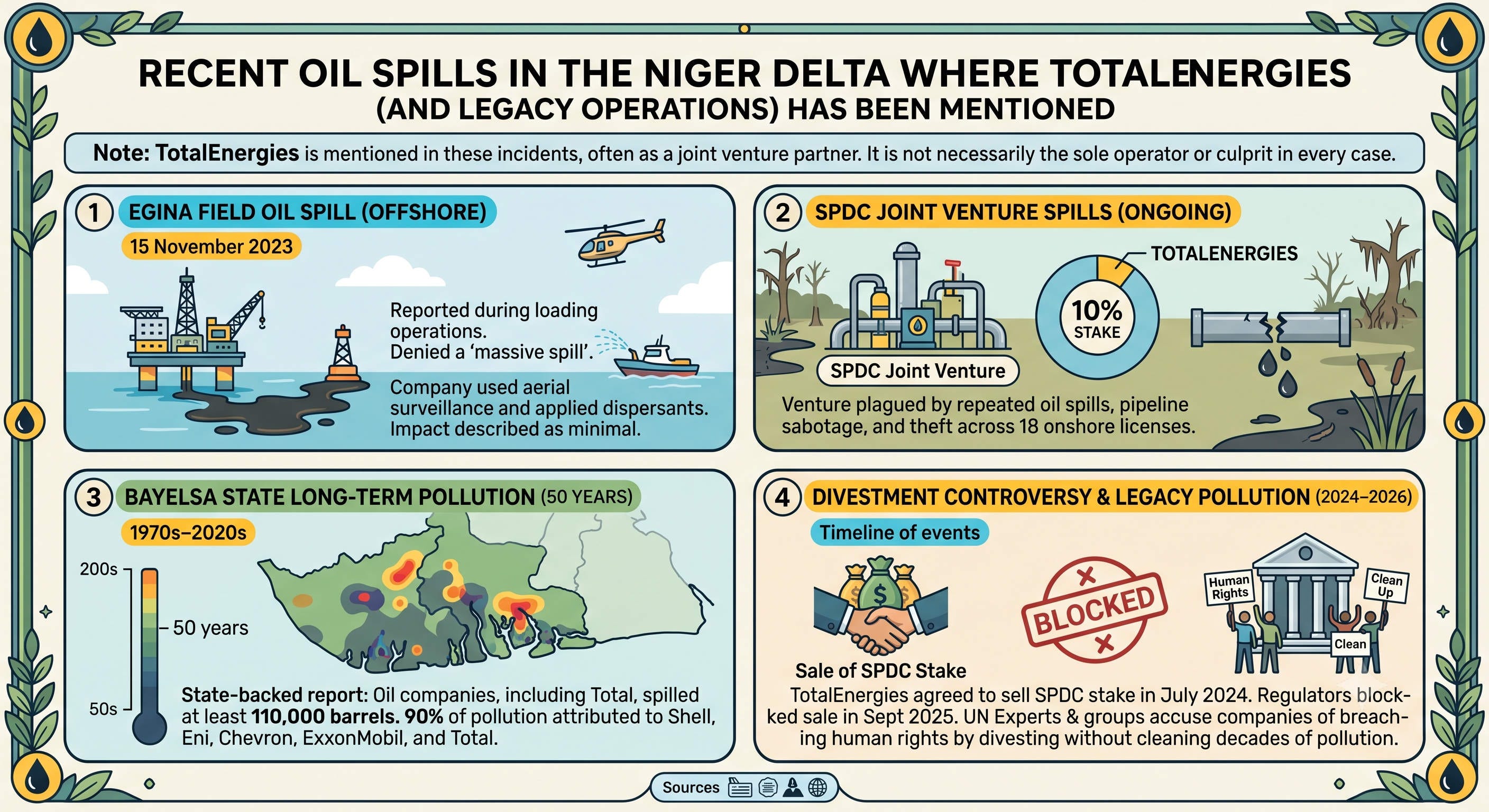
The proposed sale covers TotalEnergies’ interest in 18 onshore oil mining licences in the Niger Delta but excludes its stakes in three gas-producing licences that supply about half of the feed gas to the Nigeria LNG project. The transaction remains subject to approval by the Nigerian Upstream Petroleum Regulatory Commission (NUPRC). This follows an earlier attempt to sell the same stake to Chappal Energies, a deal that collapsed before TotalEnergies announced Vaaris as the new buyer.
The groups cited findings by the Bayelsa State Oil and Environmental Commission, which described the Niger Delta as one of the world’s most polluted places. The commission’s 2023 report estimated that between nine million and 13 million barrels of crude oil were spilled across the Niger Delta between 1958 and 2010. That amount is 35 to 50 times the volume released during the Exxon Valdez oil spill in Alaska.
“This case is about people, not just oil assets,” said Isaac Osuoka, Coordinator of Social Action International. “It is about children growing up with poisoned water, families breathing polluted air, and communities losing their health and livelihoods while international oil companies walk away with decades of profits.”
The winners: civil society groups that may force greater transparency. The losers: TotalEnergies, which faces legal scrutiny, and the communities of the Niger Delta, who have waited decades for remediation that has never come.
Bottom Line: TotalEnergies is leaving the Niger Delta. The question is whether it will pay for the damage it leaves behind.