


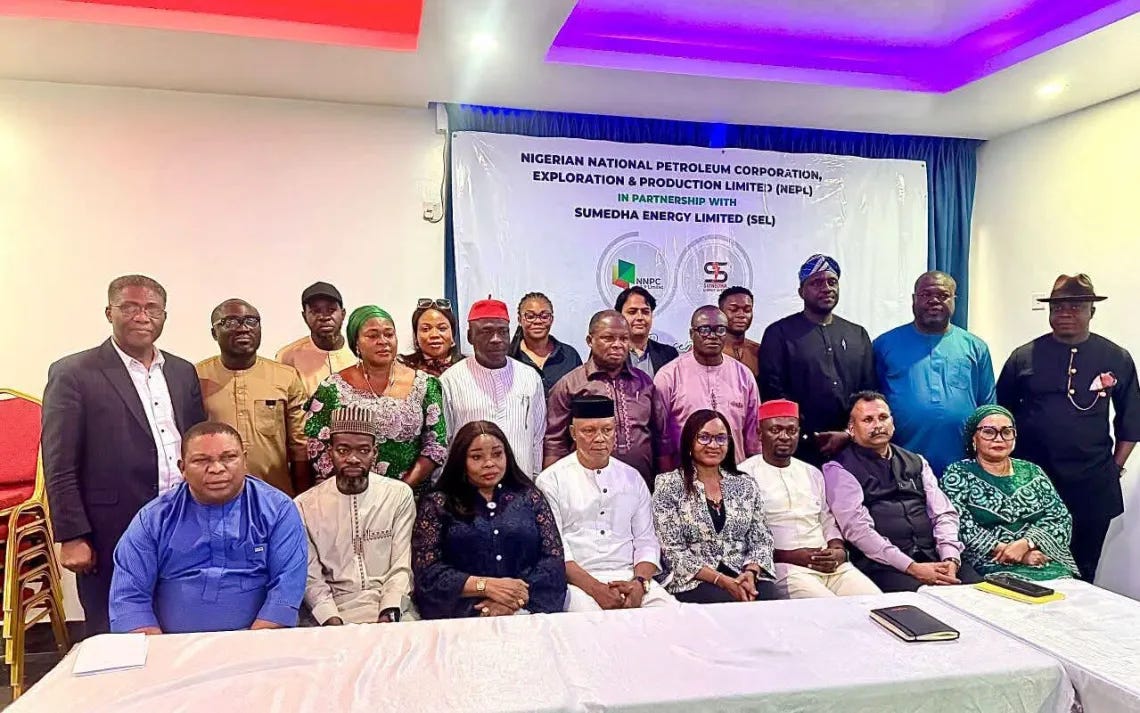
Nearly five years after the Petroleum Industry Act (PIA) set timelines for establishing Host Communities Development Trusts (HCDTs), Sumedha Energy Limited, a joint venture partner operating Oil Mining Lease (OML) 13 in Akwa Ibom State, has unveiled a comprehensive needs assessment.
The 624-page report, presented on Monday in Uyo, identifies priority interventions in healthcare, education, infrastructure, water and sanitation, youth empowerment, livelihoods, human capital development and environmental sustainability across 11 oil-producing local government areas.
Under Section 235(7) of the PIA, operators must undertake a needs assessment that forms the basis of a Community Development Plan, which determines projects to be executed by the Host Communities Development Trust. The law also makes the Community Development Plan a prerequisite for the trust’s registration.
However, Section 236 of the PIA requires operators of existing oil mining leases to incorporate the trust within 12 months of the Act taking effect. The Act came into force in August 2021, meaning operators of existing leases were expected to establish their trusts by August 2022.
Failure to comply attracts sanctions. Under Regulation 9 of the Host Communities Development Regulations, the NUPRC may issue a default notice directing an operator to establish the trust within 45 days after the deadline. Operators that fail to comply become liable to an administrative penalty of $2,500 per day until the trust is incorporated, while persistent non-compliance may lead the Commission to recommend revocation of the lease or licence.
Four years is a long time. The communities of OML 13 have waited. The report is a step forward. But a needs assessment is not development. It is a diagnosis. The treatment is still to come.
The winners: the host communities, at least on paper. The losers: the same communities, which have waited four years for a process that should have taken one.
Bottom Line: Four years late. 624 pages. The communities are still waiting for the development to start.