


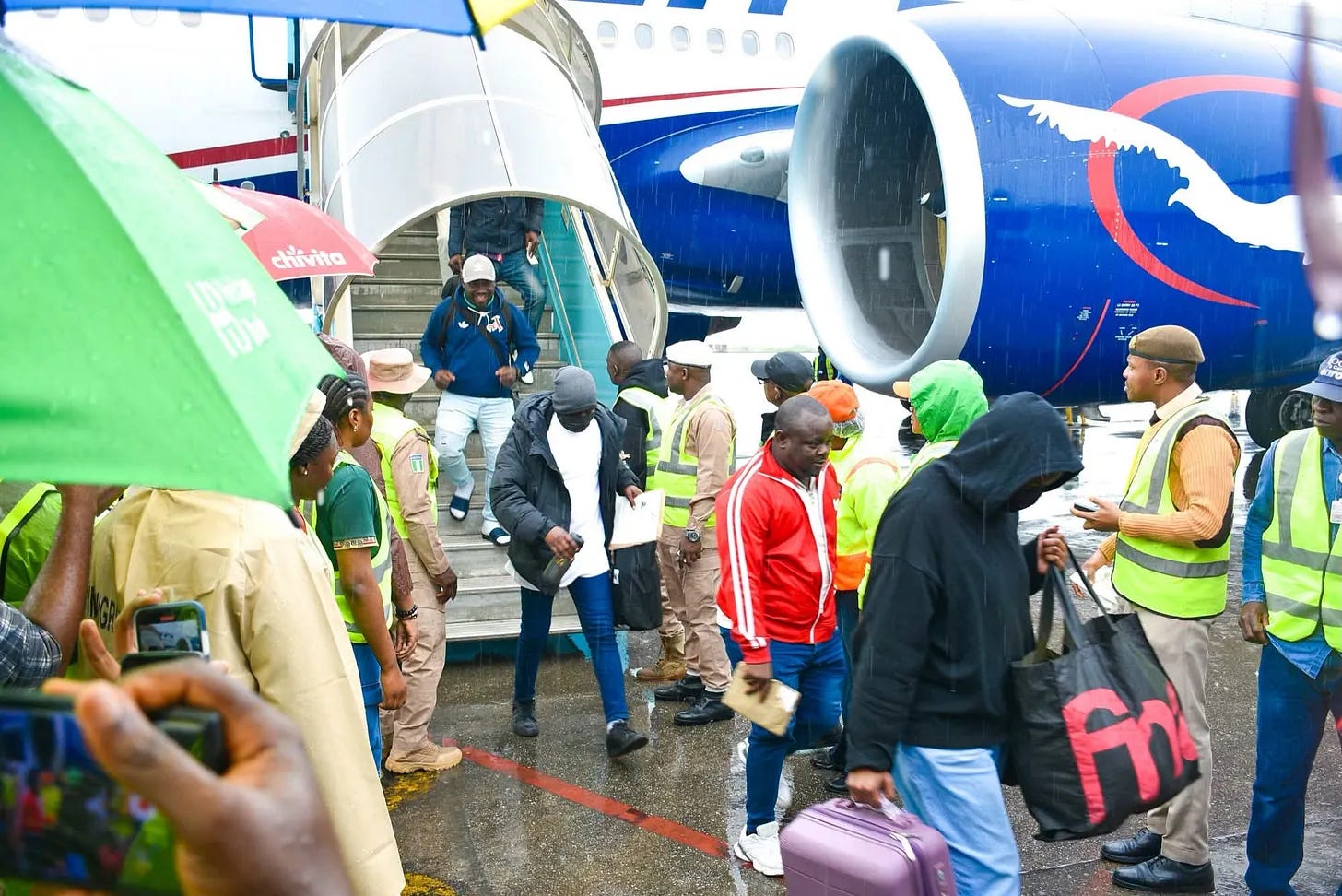
The Federal Government has announced that the final evacuation flight for Nigerians returning voluntarily from South Africa will arrive in Lagos on Wednesday, bringing an end to the ongoing repatriation exercise initiated in response to the recent wave of xenophobic violence.
In a statement issued on Tuesday, the spokesperson for the Ministry of Foreign Affairs, Kimiebi Ebienfa, said the flight, to be operated by Air Peace, is scheduled to depart Johannesburg at 1:30 am with 315 Nigerian returnees on board. According to Ebienfa, the aircraft is expected to arrive at Murtala Muhammed International Airport in Lagos at approximately 6:30 am.
The incoming flight will be the fifth evacuation flight organised by the Federal Government and the seventh batch of Nigerians repatriated from South Africa since the evacuation exercise commenced following the xenophobic attacks. The government had earlier disclosed that more than 1,000 Nigerians had indicated interest in returning home under the voluntary evacuation programme. The previous evacuation flight landed in Nigeria on July 9 with 282 returnees, increasing the total number of Nigerians repatriated since the first evacuation flight on June 11 to 1,141.
Meanwhile, the Minister of Foreign Affairs, Bianca Odumegwu-Ojukwu, has urged Nigerians who wish to return home to take advantage of the evacuation exercise. Her appeal followed reports that two additional Nigerian citizens had died in South Africa, raising the official death toll linked to the latest wave of xenophobic violence to four. Some of the repatriated Nigerians, however, have claimed that the number of fatalities may be higher.
Odumegwu-Ojukwu also assured Nigerians that the Federal Government remained committed to ensuring that every citizen who registered and expressed a desire to return home would be accommodated under the repatriation programme.
The Nigerian stake is clear. Thousands of Nigerians live and work in South Africa, and they face the same risks. Nigeria, one of several countries that have repatriated their citizens, has demonstrated its ability to respond to crises abroad. But the evacuation is reactive rather than preventive.
This mirrors the 2019 repatriation of Nigerians from South Africa following xenophobic attacks. The mechanism then was different, but the result was the same: African migrants targeted, businesses looted, and governments scrambling to respond.
The winners: the Nigerians who are returning home safely. The losers: the families of the four Nigerians who died; the Nigerian government, which must reintegrate the returnees; and the African Union, which has failed to address the recurring violence.
Bottom Line: The final batch of Nigerians is coming home from South Africa. The evacuation is ending. The xenophobia is not. Nigeria must do more to protect its citizens abroad.