


Fidelity Bank has confirmed Stanley Chiedoziem Amuchie as its substantive Managing Director and Chief Executive Officer, following approval by the Central Bank of Nigeria. The appointment takes effect on 1 January 2027. Amuchie, currently an Executive Director and the bank’s Chief Operations and Information Officer, succeeds Nneka Onyeali-Ikpe, whose tenure ends on 31 December 2026. Board Chairman Amaka Onwughalu said the appointment reflects confidence in his leadership and deep understanding of the bank’s business.
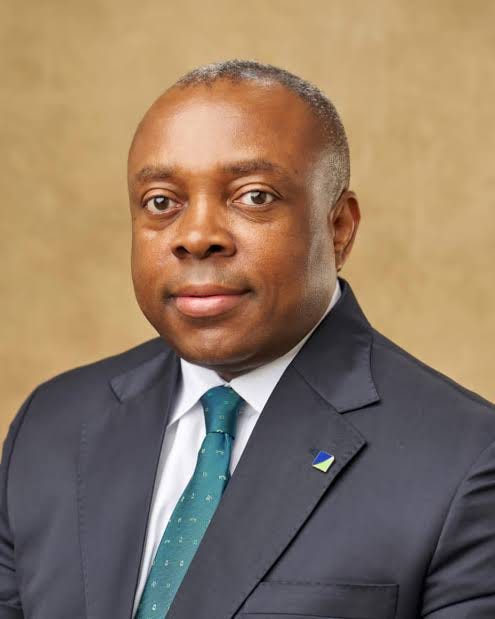
The mechanics of the succession are instructive. Amuchie spent most of his career at Zenith Bank, where he rose to Group Chief Financial Officer, before joining Fidelity in January 2022 as Executive Director for Operations and Information Technology. He played a role in Fidelity’s acquisition of Union Bank UK, now FidBank UK, and in the bank’s $400 million Eurobond refinancing. He holds a First Class degree in Industrial Chemistry from the University of Nigeria, Nsukka, and is a Fellow of the Institute of Chartered Accountants of Nigeria. His background is operations and technology, which is where Nigerian banks are now fighting their hardest battles: fraud, digital adoption and cost efficiency.
This echoes the 2021 transition when Onyeali-Ikpe took over, also from an insider position, and the CBN’s preference for continuity in tier-one bank leadership. It also mirrors the longer pattern of Nigerian banks promoting from within rather than importing external CEOs, a choice that preserves institutional memory but can narrow strategic options.
The winners are the board, which gets a leader who already knows the balance sheet, and the CBN, which gets a candidate it has vetted. The losers are external candidates who might have brought a different perspective, and the bank’s shareholders if the continuity choice turns out to be a complacency choice.
Bottom Line: An insider succession is a bet on continuity. Fidelity will soon find out whether continuity is what it needs.