


The Federal Government has finalised an agreement with Thales Alenia Space to design and deploy Nigeria’s next-generation telecommunications satellite. The satellite is named NigComSat-2A. Thales Alenia Space, a joint venture between Thales and Leonardo, signed the contract with NIGCOMSAT Ltd.
Nigeria launched NigComSat-1 in 2007. It failed in orbit. NigComSat-1R was launched in December 2011. It became the first communications satellite in sub-Saharan Africa. It has operated for over a decade. NigComSat-2A is the successor. NIGCOMSAT is a government-owned company under the Federal Ministry of Communications, Innovation and Digital Economy.
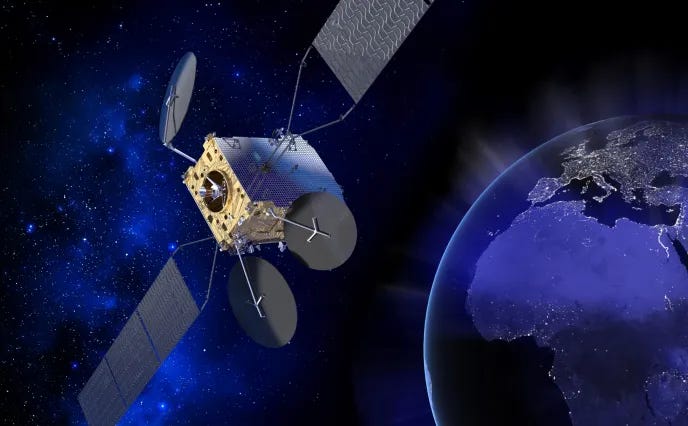
The satellite will operate from geostationary orbit. It will cover West and Central Africa to Southern Africa. It has a launch mass of nearly four tons. Its operational life exceeds 15 years. It will be based on Thales Alenia Space’s Spacebus B2 platform.
It will deliver high-quality television broadcasting, fast internet access in remote areas, and digital applications like voice calls and streaming. It will expand digital services in underserved communities. It supports the growing connectivity needs of African households, businesses and public institutions.
Nkechi Jane Egerton-Idehen, NIGCOMSAT’s Managing Director, said the contract “represents a bold step in Nigeria’s journey toward digital transformation”. Hervé Derrey, CEO of Thales Alenia Space, thanked NIGCOMSAT for its trust.
Winners: NIGCOMSAT, which gains capacity. Thales Alenia Space, which gains a contract. Nigerians in remote areas, who gain connectivity. The digital economy, which gains infrastructure. Losers: Terrestrial network operators, who face competition. The government, if the satellite underperforms. Taxpayers, if costs overrun.
Bottom Line: Nigeria is buying a new satellite. It will cover Africa. It will last 15 years. It will expand broadband access. The digital economy needs it. Delivery is the test.