


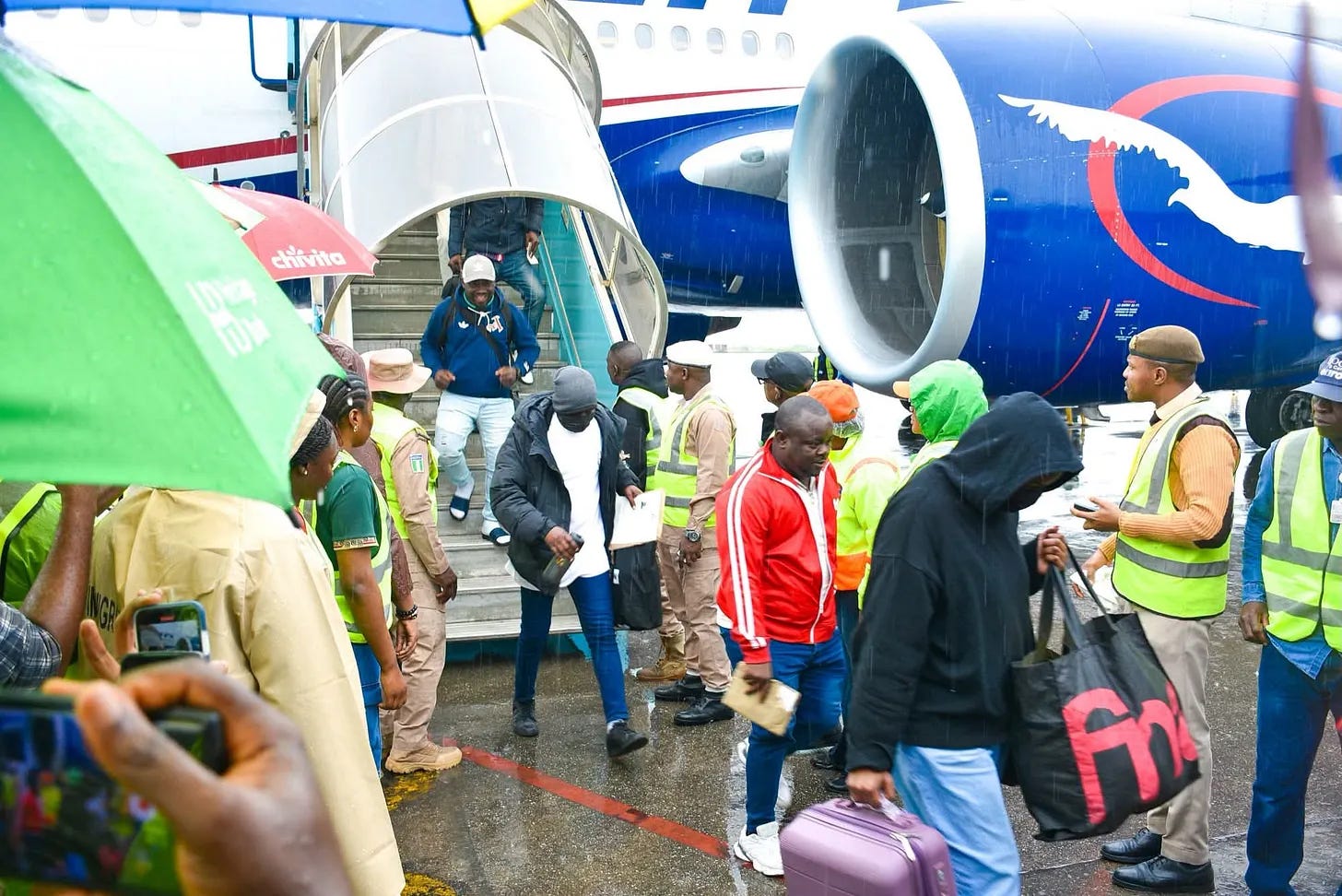
The Federal Ministry of Foreign Affairs has coordinated the voluntary repatriation of 111 Nigerian nationals from South Africa. The repatriation follows renewed xenophobic tensions. It also follows local labour safety concerns. The Nigerians returned home this week. The ministry said the exercise was voluntary. It said no one was forced to leave. The returnees arrived in Lagos. They were received by officials. They will be reintegrated.
South Africa has experienced recurring waves of anti-immigrant violence. In 2008, xenophobic attacks killed over 60 people. In 2015 and 2019, similar riots targeted foreign nationals. In 2024, tensions rose again. Migrants from Zimbabwe, Mozambique, Malawi and Nigeria are frequently blamed for unemployment, crime and pressure on services. Social scientists say the allegations are unsupported by evidence. Nigeria has repatriated citizens before. In 2019, over 600 Nigerians returned after attacks. In 2023, another 200 were evacuated. The pattern repeats because the underlying tensions remain unresolved.
The ministry said the repatriation was voluntary. It said the Nigerians faced renewed hostility. It cited labour safety concerns. The returnees arrived at Murtala Muhammed International Airport. They were received by officials from the Nigerians in Diaspora Commission. They were given transport and temporary accommodation. Some will be reunited with families. Others will need support to restart their lives. The ministry did not disclose the cost of the exercise. It did not say whether more repatriations are planned.
The South African government has not commented. It has condemned xenophobic violence in the past. It has promised to protect foreign nationals. Enforcement is weak. Migrants remain vulnerable. Many live in informal settlements. They face daily harassment. Some have been killed. The repatriation is a response to that reality. It is not a solution.
Winners: The 111 returnees, who gain safety. The Foreign Ministry, which shows action. NIDCOM, which coordinates reception. The Nigerian government, which demonstrates concern. Losers: Nigerians still in South Africa, who face continued risk. Those who lost livelihoods. The returnees, if reintegration fails. Nigeria, which loses diaspora remittances. The South African economy, which loses labour.
Bottom Line: One hundred and eleven Nigerians came home. They left because they were unsafe. The repatriation is necessary. It is not enough. Until xenophobia is addressed, more will follow. Nigeria must support those who return.