


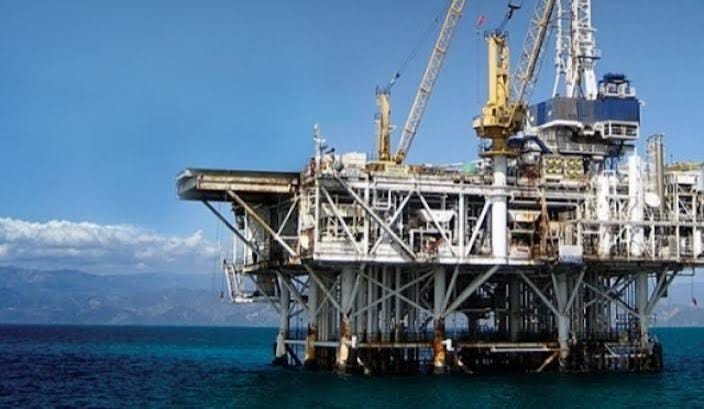
The Nigerian Upstream Petroleum Regulatory Commission has announced the 2026 oil licensing round, offering 40 blocks across land, shallow water and deepwater terrains. The announcement came as Minister of State for Petroleum Resources (Oil) Heineken Lokpobiri said crude oil and condensate production has risen to 1.82 million barrels per day.
That represents an increase of more than 80 per cent from the level recorded when the Tinubu administration assumed office in 2023. The growth is supported by a sharp rise in drilling activity, with more than 73 rigs now active in the country, up from fewer than 10 in 2023.
This mirrors the transformation of Nigeria’s upstream sector since the Petroleum Industry Act of 2021. The PIA created the NUPRC as a regulator separate from the NNPC, introduced clear fiscal terms for investors and established a framework for host community development. The licensing rounds since then, including the 2022 Deep Offshore Mini Bid Round, the 2024 Nigerian Licensing Round and the 2025 Nigerian Licensing Round, have awarded 57 Petroleum Prospecting Licences.
The NUPRC has approved 120 oil and gas Field Development Plans since 2024, representing about $47.6 billion in capital commitments. Those projects are expected to add 1.74 million barrels of oil and 13.9 billion standard cubic feet of gas per day to Nigeria’s production capacity when fully developed.
The 2025 licensing round attracted 143 companies that submitted 200 bids, with 31 companies emerging as winners of 37 blocks. Investor interest extended beyond the traditional Niger Delta producing areas, with frontier basins including the Anambra Basin, Benue Trough, Chad Basin and Benin Basin attracting bidders.
The 2026 round will require disclosure of beneficial owners of every bidder. The evaluation methodology and results will be published more fully. NUPRC Chief Executive Oritsemeyiwa Eyesan said the commission is determined to make the exercise more transparent and predictable. “Competition for upstream capital is fierce, and it grows fiercer by the day,” she said. “Investors have choices. They go where the rules are clear, where the process is predictable and where data can be trusted.”
The human stakes are about revenue and energy security. Higher production translates into more dollars for the Federation Account, which funds the three tiers of government. It also reduces Nigeria’s reliance on imported refined products if domestic refining capacity expands. But production growth without corresponding investment in refining and infrastructure keeps Nigeria in the paradox of exporting crude and importing petrol.
Winners and Losers
Winners: The Federal Government, which gains increased oil revenue and demonstrates reform progress. Indigenous oil companies, which now produce about 60 per cent of Nigeria’s crude. Service companies, which benefit from increased drilling activity. Frontier basin states, which attract exploration interest.
Losers: Communities in oil-producing areas, which continue to bear environmental and social costs. Future generations, whose oil inheritance is being depleted without equivalent investment in renewable energy. Consumers, who remain exposed to global oil price volatility.
Bottom Line: 1.82 million barrels per day is a milestone. Forty blocks on offer is an opportunity. The test is whether the production gains are durable and whether the revenue reaches the Nigerians who need it.