


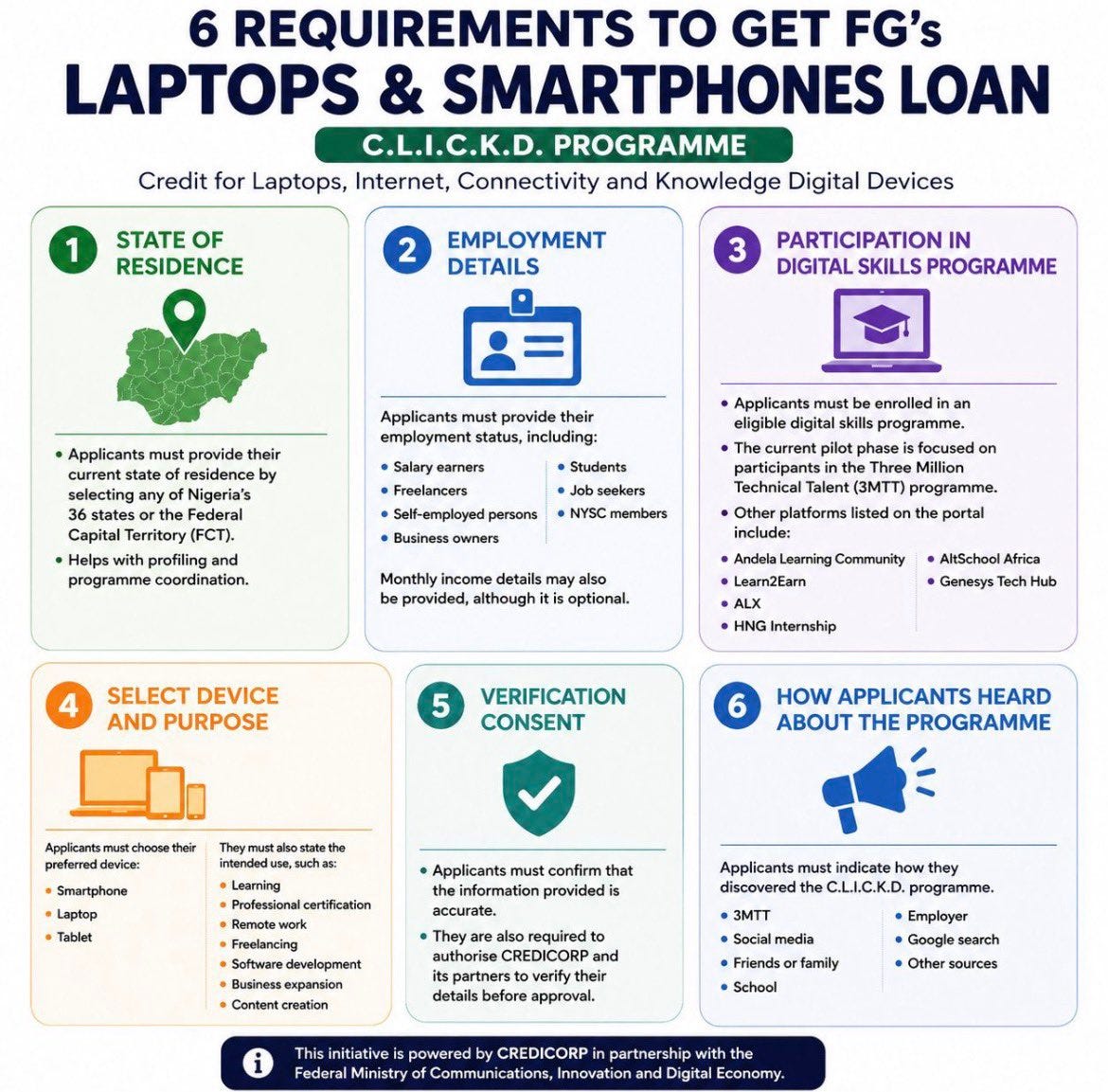
The Federal Government launched the C.L.I.C.K.D (Credit for Laptops, Internet, Connectivity and Knowledge Digital Devices) initiative to expand affordable access to smart devices and laptops for students and small businesses nationwide. The programme, run by the Nigerian Consumer Credit Corporation (CREDICORP) in partnership with the Federal Ministry of Communications, Innovation and Digital Economy, provides structured financing for digital tools.
The inaugural phase focuses on fellows training through the Learn2Earn platform, providing 1,000 locally assembled laptops to eligible beneficiaries. Fidelity Bank serves as the credit administration partner, while NASENI and Imose Technologies will assemble the devices. The rollout began in Abuja with 77 beneficiaries receiving devices.
Minister of Communications, Innovation and Digital Economy, Dr Bosun Tijani, said the initiative is designed to ensure Nigerians have access to both digital skills and the tools required to participate in the country’s growing digital economy. “Nigeria’s digital economy can only thrive when our people have both the skills and the tools to succeed,” Tijani said. CREDICORP Managing Director Uzoma Nwagba said the scheme removes the upfront cost of acquiring digital devices while promoting responsible consumer credit and local manufacturing.
The initiative represents a significant step towards bridging Nigeria’s digital divide. Access to devices remains a major barrier to digital inclusion, and the C.L.I.C.K.D programme offers a structured pathway to ownership. The focus on locally assembled devices also supports the government’s industrialisation agenda.
This echoes the 2020s digital inclusion programmes, which have sought to expand access to technology. The mechanism then was different, but the result was the same: a recognition that digital skills require digital tools.
The winners: students and small businesses who gain access to devices; and the Nigerian economy, which benefits from increased digital inclusion. The losers: the beneficiaries who do not receive devices; and the Nigerian government, which must scale the programme.
Bottom Line: Nigeria has launched a device financing scheme for digital skills. The goal is to equip Nigerians for the digital economy. The question is whether the scheme can scale beyond the first 1,000 beneficiaries.