


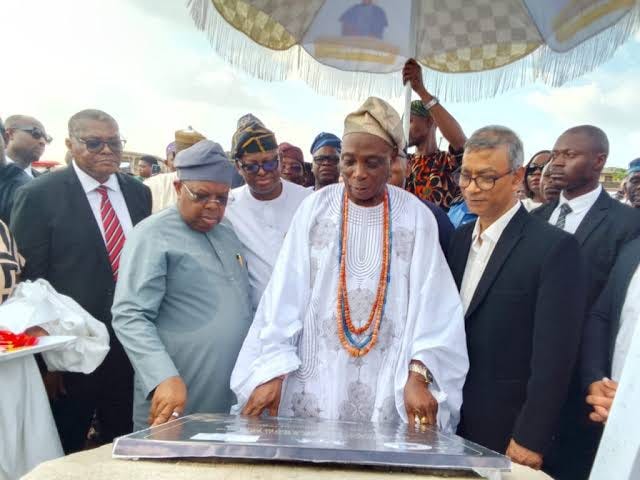
The Federal Government has flagged off a 17.7MW hybrid solar mini-grid project in Oyo State. The project includes a 17.74MW Battery Energy Storage System. It will serve communities across five local government areas. The Minister of Power, Joseph Tegbe, performed the ceremony in Ibadan on Thursday. The project will benefit 22,597 customers.
Nigeria’s grid delivers about 4,000 megawatts for over 220 million people. Many communities have no access. Distributed solar mini-grids offer an alternative. The Rural Electrification Agency has promoted them. Private developers partner with distribution companies. The model has worked in Mokoloki, Ogun State and Oke-Oyi, Kwara State. The current project expands that effort.
Tegbe said the project would serve Akinyele, Ido, Ibadan North, Egbeda and Lagelu local government areas. The clusters are Bola, Jiboye, Molade-Adelubi, Ogo-Oluwa and Sooko-Elega. He said the interconnected mini-grid would improve supply to homes and businesses. It would reduce generator dependence. It would create conditions for investment and jobs.
Tegbe dismissed reports of a planned electricity tariff hike. “I want to say this clearly and without ambiguity: there is no plan to increase electricity tariffs,” he said. He said the government plans to build and improve the national grid across eastern, western and central corridors. He cited three Energy Zones: Lagos-Ogun, Abuja-Kaduna-Kano, and Benin-Enugu-Port Harcourt.
The IBEDC Managing Director, Deolu Ijose, said the project would use existing distribution infrastructure. He said it builds on previous mini-grid projects. The REA Managing Director, Abba Abubakar-Aliyu, provided the breakdown: 1.8MW in Bola, 3.5MW in Jiboye, 6.9MW in Molade, 3.6MW in Ogo Oluwa and 1.9MW in Sooko. The Olubadan of Ibadanland, Oba Rashidi Ladoja, urged the state government to complete its hybrid power project before 2027.
Winners: Oyo communities, which gain power. Businesses, which gain reliable electricity. IBEDC, which gains capacity. Paras Energy, which gains a project. REA, which shows delivery. Losers: Generator sellers, who lose business. Communities not selected. The grid, which faces competition. Taxpayers, if the project is mismanaged.
Bottom Line: A 17.7MW solar project has been launched. It will serve 22,597 customers. The minister denied tariff hike plans. The project is part of a broader strategy. Mini-grids are working. Nigeria needs more of them.