

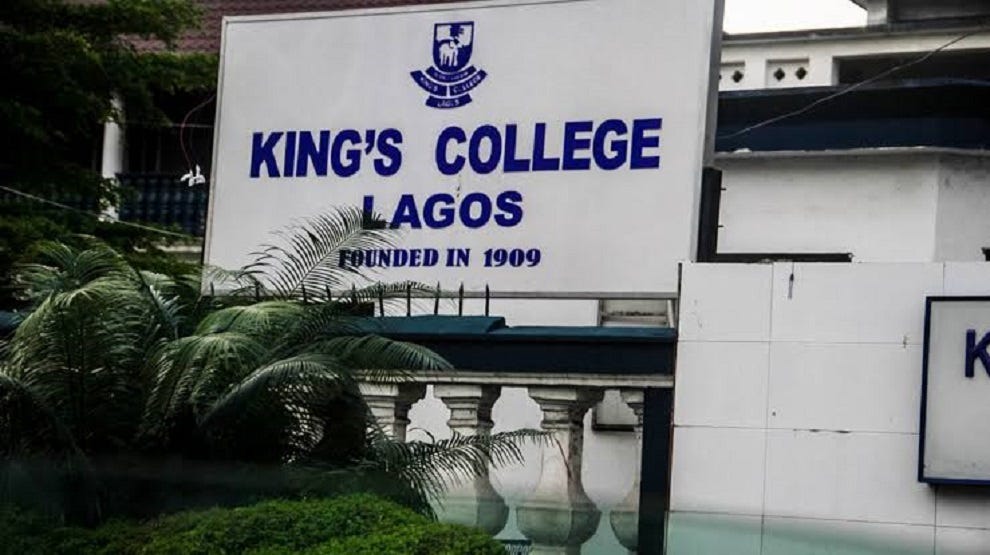
The Minister of Education, Tunji Alausa, has affirmed that the Federal Government will proceed with concessioning the management of King’s College, Lagos to its Old Boys Association. He clarified that unity colleges will remain government-owned. The concession is a Public-Private Partnership arrangement.
King’s College was founded in 1909. It is one of Nigeria’s oldest and most prestigious schools. The concession proposal has faced strong opposition. Education unions shut down Federal Unity Colleges nationwide in protest. They fear privatisation, job losses and higher fees. In 2017, a similar plan to sell unity schools was shelved after protests. The current government is proceeding despite the backlash.
Alausa’s statement confirms the government’s position. The King’s College Old Boys Association (KCOBA) will take over management. The school remains publicly owned. Unions reject the arrangement. They argue it sets a precedent for other unity schools. The ASCSN blocked resumption at FGGC Umuahia. Similar actions occurred in Anambra, Ebonyi and Enugu. Students have missed the start of the academic session. Parents are uncertain.
The government’s logic is efficiency. KCOBA has resources and alumni commitment. It can improve infrastructure and academic standards. The unions’ logic is equity. Unity schools were built to promote national integration. Concessioning them to alumni associations could deepen inequality. The outcome depends on the terms. If KCOBA invests and keeps fees affordable, the model could work. If it raises fees and excludes poor students, the unions’ fears are justified.
Winners: KCOBA, which gains management control. The Federal Government, which offloads operational costs. Students, if infrastructure and standards improve. Losers: Unions, which lose the argument. Teachers, who face uncertain employment terms. Poor students, if fees rise. Other unity schools, if concession becomes a template. Students who miss school during the strike.
Bottom Line: The government will concession King’s College. The unions cannot stop it. The test is whether the model preserves access for poor students or turns a national school into an elite institution.