


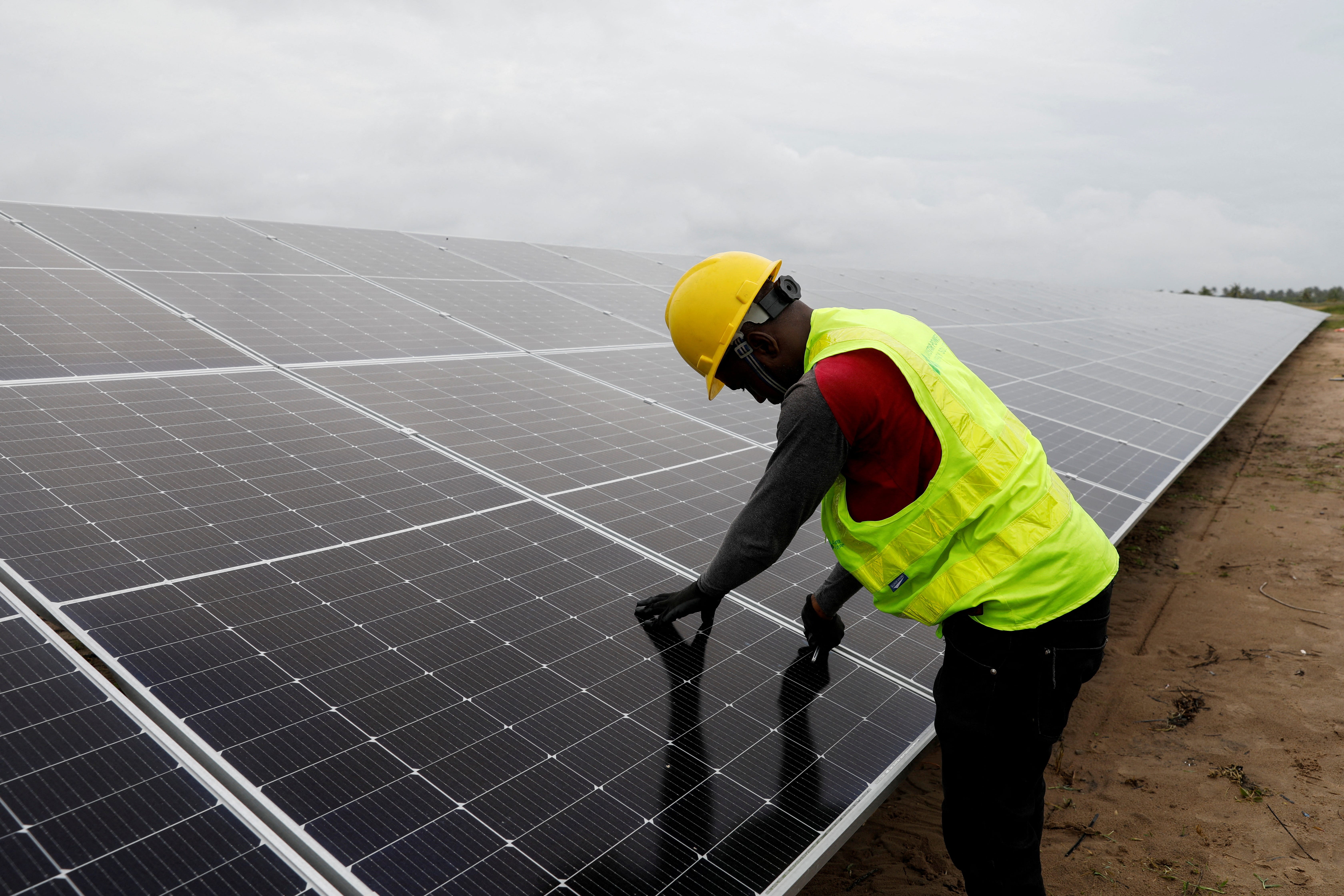
The Federal Government has declared that solar electrification will be the backbone of efforts to expand electricity supply to Nigerians not connected to the national grid. The Minister of Power, Joseph Tegbe, made the declaration at the launch of the Africa Mini-grids Programme (AMP) in Abuja.
The AMP is a pilot programme organised by the United Nations Development Programme (UNDP) in partnership with the Rural Electrification Agency (REA). It will deploy 23 solar mini-grids to power 50,000 households across the country.
“Renewable energy, especially solar technology, is not an alternative source of power. It is not a diesel generator solution but an integral part of our national power architecture,” Tegbe said. “Today in Nigeria, for the first time, we have a solar farm that is producing 200 megawatts of power.”
The minister said the approach is to deploy technology appropriately to meet the unique energy needs of different communities. “In this project, we are looking at areas where our transmission lines and transformers have not gotten to yet. So we want to reach the last mile using mini-grids and serving the communities, the businesses, the healthcare, the education sectors, and the rest of it.”
The Managing Director of REA, Aliyu Abba, said the AMP connects electricity to productivity, combining public grant financing with private-sector financing. He noted that communities across Nigeria cannot utilise their economic potential due to a lack of electricity. The UN Resident and Humanitarian Coordinator in Nigeria, Mohamed Malick Fall, said the mini-grids will bring clean and affordable energy to every community. “It’s clean jobs for young people, it drives economic growth and it improves life. There is no sustainable development without sustainable energy,” he said.
This is not the first time solar has been positioned as the solution to Nigeria’s power crisis. The 2015 Rural Electrification Strategy and Implementation Plan promised to reach 10 million households by 2023. The actual number reached was a fraction of that target. The pattern is consistent: ambitious announcements, limited delivery.
The winners: the 50,000 households that will receive electricity, assuming the programme is delivered. The losers: the millions of Nigerians who will remain in the dark and the government’s credibility, which takes another hit every time a promise is broken.
Bottom Line: Solar mini-grids for 50,000 households are a start. Nigeria has 40 million households without power. The math does not add up.