


The Federal Government has commenced a £746 million (approximately ₦1.45 trillion) modernisation of the Apapa and Tin Can Island ports in Lagos. The project is expected to create at least 20,000 direct and indirect jobs while reducing cargo delays and the cost of doing business.
Adegboyega Oyetola, Minister of Marine and Blue Economy, flagged off the project on Wednesday, 25 November, at Tin Can Island Port. He said the upgrade would address decades of infrastructure deficiencies and improve Nigeria’s competitiveness in international trade.
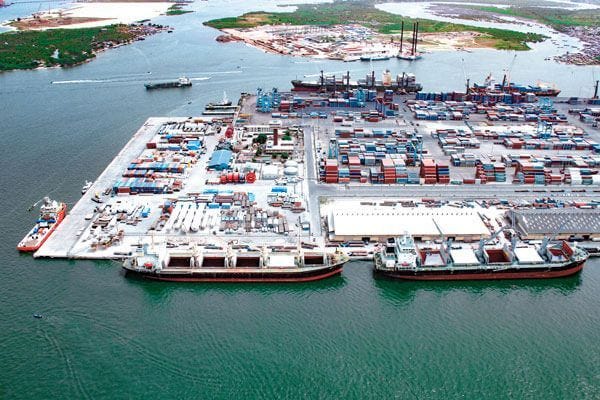
The project will cover the rehabilitation of quay walls and berths, dredging of navigation channels, improvements to access facilities, replacement of cargo-handling equipment and upgrades to operational systems.
Oyetola said the investment had become necessary because existing port facilities could no longer meet the demands of Nigeria’s expanding economy. Apapa Port was established in 1913, while Tin Can Island Port began operations in 1977.
At the time Tin Can Island opened, Nigeria’s cargo throughput stood at 8.11 million metric tonnes. Oyetola said that figure had since increased to 129.3 million metric tonnes. Annual merchandise trade has also grown from approximately $17 billion to more than $100 billion.
Despite this growth, port infrastructure has struggled to keep pace. Cargo dwell time in Nigeria has historically ranged between 10 and 18 days, compared with three to five days at leading international ports.
According to the minister, congestion, demurrage and storage charges associated with these delays cost the Nigerian economy as much as $4 billion annually. He warned that Nigeria risked losing maritime business to neighbouring countries investing in modern ports and deep-sea facilities.
The government expects the modernisation to attract more international shipping lines, retain Nigerian-bound cargo and expand transshipment activities. It also hopes improved facilities will help exporters move agricultural products, processed foods, solid minerals and manufactured goods more efficiently.
Finance Minister Taiwo Oyedele described the financing arrangement as Nigeria’s largest sovereign export credit transaction since 2009. He also said it was the first project in Nigeria involving Poland’s Export Credit Insurance Corporation, known as KUKE.
To limit disruption during construction, Oyetola approved an inter-ministerial committee involving the Federal Ministry of Marine and Blue Economy, the Nigerian Ports Authority and the Nigeria Ports Economic Regulatory Agency. The committee will coordinate construction phases, vessel scheduling, cargo evacuation and truck movement.
The winners could include importers, exporters, manufacturers, transport operators and workers recruited for construction and port operations. Consumers may also benefit if lower logistics costs eventually translate into more affordable goods. However, businesses and traders could face temporary disruptions while rehabilitation work continues.
The project forms part of a wider maritime modernisation programme that also covers Onne, Rivers, Delta and Calabar ports. Its success will depend on timely execution, effective supervision and the government’s ability to keep cargo moving during construction.
Bottom Line: The ₦1.45 trillion investment could reduce the cost of moving goods and create jobs, but Nigerians will judge it by faster cargo clearance and measurable improvements in port operations.