


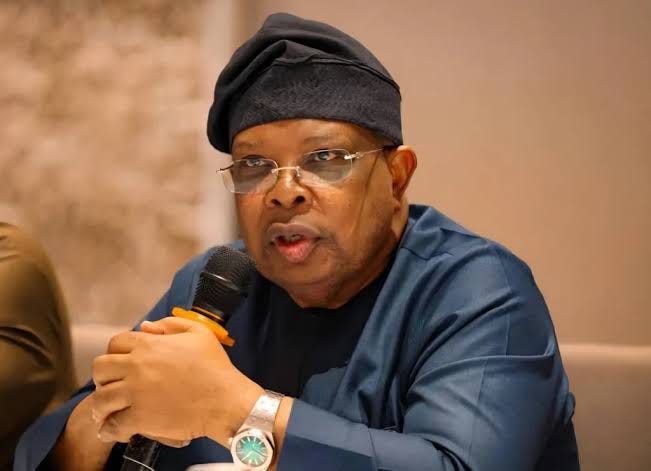
The Federal Government has approved a $2 billion investment in an East-West Super Grid, according to the Minister of Power, Olasunkanmi Tegbe. The line will run through Funtua, Gwagwalada, Ikot-Ekpene, Benin, Epe and Ilorin. It promises at least 19,000 megawatts of additional transmission capacity, delivered in 18 months to two years. Procurement is already under way.
Hold that number against the record. The national grid has struggled to hold above 5,000 megawatts for most of the past decade. Generation is not the binding constraint. Evacuation is. So 19,000 megawatts of new capacity is a credible ambition, and an incomplete one. Nobody has explained where the power to fill it will come from, or who pays.
The minister supplied part of the answer himself. Plants operated by the Niger Delta Power Holding Company have installed capacity above 3,000 megawatts and deliver roughly 400. Gas supply and transmission constraints explain the gap. Separately, the government has paid ₦1.23 trillion of the ₦3.3 trillion it owes generation companies. About ₦2 trillion remains outstanding, with settlement targeted for 2027. For a gas supplier in the Niger Delta, that is not a receivable. It is a reason to stop answering the phone.
The historical echo is the National Integrated Power Project, launched in 2005 with similar confidence. It promised thousands of megawatts, delivered a fraction, and left stalled substations that took two decades to untangle. The difference this time is the Electricity Act 2023, which lets states build their own markets. Lagos, Ogun, Abia and Enugu are already moving. That decentralisation is the most consequential sentence in the announcement, and the least quoted.
The Osogbo-Ikeja West corridor is flagged for restoration, with 400 megawatts expected into the Lagos complex. That is a repair, not a revolution, and it will matter more this quarter than a line through six states. For a tailor in Ariaria market running a generator, the super grid changes nothing this year. What changes her week is whether the local feeder holds for six hours.
Winners: Transmission contractors, states building independent markets, and the federal government, which gains a headline number. Losers: Generation companies still owed ₦2 trillion, gas suppliers, and consumers who will keep paying for diesel while the grid is rebuilt.
Bottom Line: The super grid is necessary. But transmission without a solvent generation sector is a wide road with no traffic on it.