


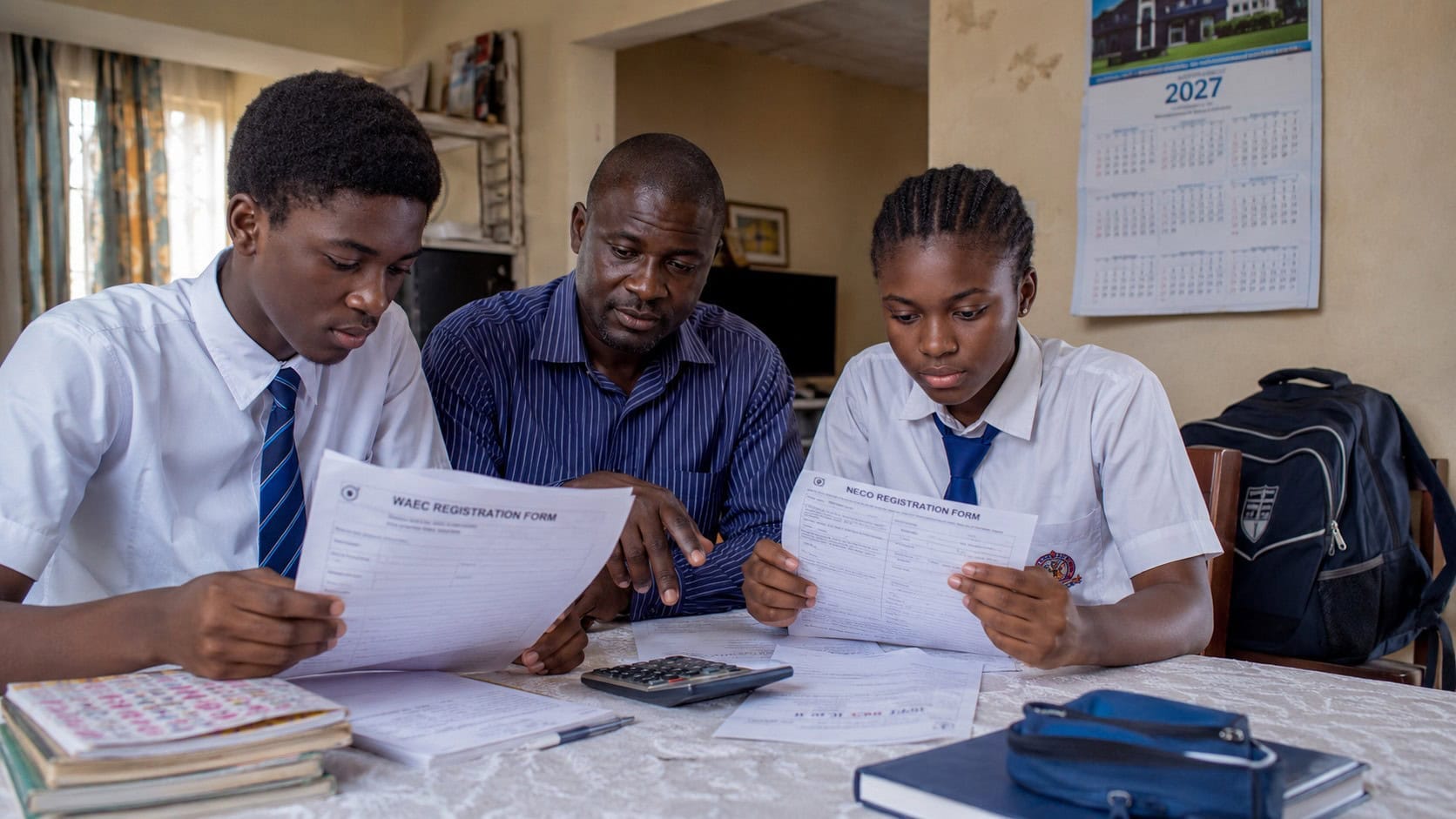
The federal government has raised the registration fees for the Senior Secondary Certificate Examination conducted by WAEC and NECO to ₦50,000 from the 2027 session. The approval, contained in a memo dated 18 June 2026 and signed by Adeniji Ibrahim, director of senior secondary education at the Federal Ministry of Education, harmonises the fees charged by both examination bodies for the first time.
Under the new pricing, NECO’s internal SSCE fee rises to ₦50,000 from ₦30,000, an increase of about 67 percent, while WAEC’s fee climbs to ₦50,000 from ₦27,000, nearly doubling the current charge. The memo, addressed to the registrar of NECO, noted that the review followed a meeting between examination bodies and the minister of education on 31 March 2026, at which the minister directed WAEC and NECO to adopt a uniform fee structure.
The fee adjustment is expected to widen the exposure of state governments, which currently foot the exam bills for candidates in public schools, several of whom already owe arrears to the examination bodies. Stakeholders believe that the higher unit cost could strain state education budgets already under pressure from other recurrent obligations, potentially deepening the backlog of unpaid dues to WAEC and NECO.
The policy shift has also stoked concern among parents, particularly in states where government subsidy covers only one of the two examinations. In Lagos State, for instance, the government pays WAEC fees for SSCE candidates, leaving households to cover NECO registration costs independently, a cost that will now rise sharply under the harmonised fee. Stakeholders fear that in states with no government support at all, the near-doubling of fees could push registration beyond the reach of low-income households, potentially reducing candidate turnout for the 2027 examinations.
The increase represents a heavy burden for millions of Nigerian families already struggling with rising living costs. For a minimum-wage earner, the new fee of ₦50,000 is more than six months’ salary. This mirrors the 2018 tuition fee hikes in federal universities, which priced many students out of higher education. The mechanism then was different, but the result was the same: education becoming a privilege for the wealthy.
The winners: WAEC and NECO, which will receive more revenue. The losers: millions of Nigerian students and their families, who will struggle to afford the new fees; and the Nigerian education system, which risks excluding the poorest from secondary education.
Bottom Line: Exam fees have nearly doubled to ₦50,000. For millions of Nigerian families, that is not a fee. It is a barrier.