


The Economic and Financial Crimes Commission is planning to bring licensed operators into the illegal industrial facilities it uncovered in Ogere, Ogun State. The commission’s chairman, Ola Olukoyede, disclosed this after inspecting the site. He said the agency would seek court approval before any handover. The goal is to preserve the assets and redirect them toward legitimate use.
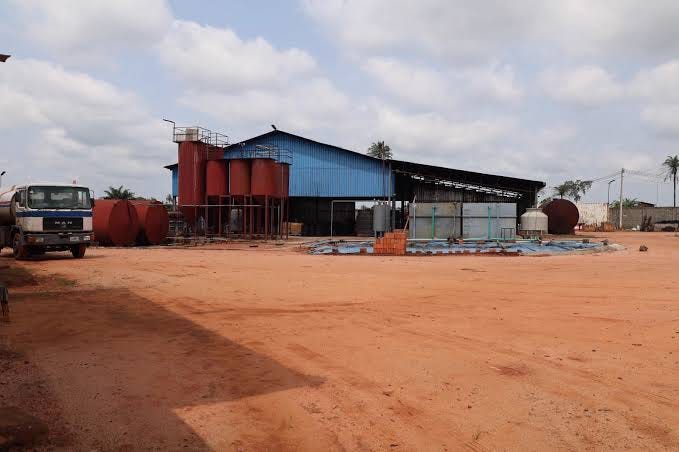
The raid on the Ogere complex exposed a sprawling operation. It included illegal petroleum refining, lithium processing and wood processing for export. The facilities ran on heavy machinery and independent power generation. Warehouses held lithium batteries, telephone batteries, chargers and hundreds of motorcycles. The EFCC arrested suspects, including foreign nationals, and launched Operation Sovereign Wealth to recover allegedly exploited resources. The discovery followed the shutdown of four illegal lithium plants in the same area. The presence of police officers among the suspects suggested official protection. The complex could not have operated without local collusion.
Olukoyede said the commission would not destroy the facilities. “One of the high points of the fight against financial crimes and economic crime is to use it to stimulate the economy,” he said. “So all these things will not be destroyed. We are going to preserve them.” He said the EFCC would apply for court orders and involve relevant regulatory agencies to identify professionals and businesses licensed to run such operations. The arrangement would protect jobs while ensuring future operations are legitimate.
The commission has not named any operators. It has not confirmed that it has handed over any facilities. The investigation covers money laundering, economic sabotage and illegal mining. Suspects are providing information about collaborators outside Nigeria. The EFCC has deployed personnel for 24-hour security at the site.
The plan is pragmatic. Destroying the facilities would waste productive assets and cost jobs. Handing them to licensed operators could turn an illegal operation into a legal one. The model could be replicated at other sites. But it also raises questions. Who decides which operators are qualified? How will the process be transparent? The court orders will provide legal cover, but the public will watch for favouritism.
Winners: The EFCC, which shows a constructive approach. Workers at the facilities, who may keep their jobs. Licensed operators, who may gain assets. The government, which gains a narrative of economic recovery. Losers: The illegal operators, who lose control. Their foreign collaborators, who face investigation. Implicated police officers, whose corruption is exposed. Communities that suffered environmental damage. Taxpayers, if the handover is mismanaged.
Bottom Line: The EFCC wants to turn an illegal complex into a legal one. Preserving jobs and assets is smart. The court process must be transparent. If it works, it becomes a template. If it fails, it becomes a cover for the same networks.