


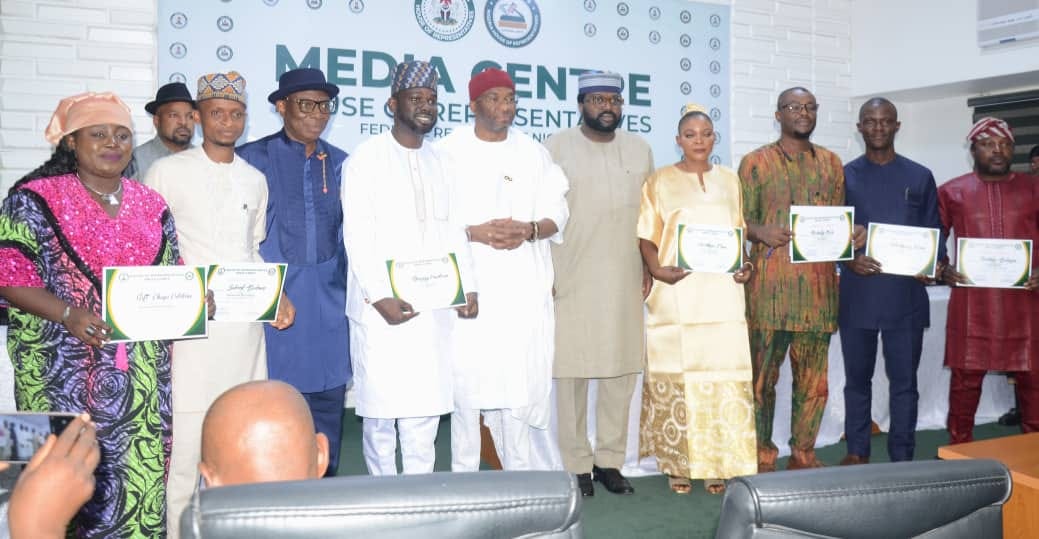
The Deputy Speaker of the House of Representatives, Benjamin Kalu, has called on Nigerian journalists to embrace balanced reporting by highlighting the country’s progress and opportunities while continuing to hold the government accountable. Speaking on Thursday during the inauguration of the newly elected executive of the House of Representatives Press Corps in Abuja, Kalu said journalism should not be limited to exposing government shortcomings but should also showcase achievements that can improve Nigeria’s image locally and internationally.
Kalu said conversations with foreign partners had reinforced concerns that Nigeria’s strengths and investment opportunities were often overshadowed by negative narratives. “I recently held discussions outside Nigeria, including with ambassadors of the European Union, and one of the issues they raised was why reports about Nigeria tend to emphasise our weaknesses rather than the many opportunities the country offers,” he said.
The deputy speaker said journalists should tell stories that reflect both the country’s challenges and the efforts being made to address them. “Can we write about what makes Nigeria good? Can we project the opportunities in Nigeria? Can we tell the good stories of what this administration is doing? Journalism should not be only about where government is failing. It should also inform people about what is working and the steps being taken to correct what is not,” he said.
Kalu described such an approach as the essence of balanced journalism, saying it would provide citizens with a fuller understanding of national development while maintaining the media’s watchdog role. He also reaffirmed his support for the parliamentary press, noting that he had maintained a close working relationship with journalists covering the National Assembly.
The deputy speaker described the legislature as the cornerstone of Nigeria’s democratic system and urged members of the press corps to strengthen public understanding of the institution by reporting its constitutional responsibilities comprehensively. He said journalists should continue to spotlight legislative oversight, lawmaking, constituency representation, public hearings and debates to enable Nigerians to appreciate the work of parliament.
“The parliament may not always be able to tell its own story, but you remain our voices. Your reports shape public understanding of what we do and have the power either to unite or divide the nation,” he said. Kalu urged journalists to use their platforms to promote national cohesion, patriotism and unity while maintaining professionalism.
This echoes the 2019 debate over “development journalism,” when media owners and politicians called for a shift away from negative reporting. The mechanism then was different, but the result was the same: a tension between the media’s watchdog role and the government’s desire for positive coverage.
The winners: the government, which seeks more favourable coverage. The losers: the media, which faces pressure to self-censor, and the Nigerian public, which depends on the media to hold power accountable.
Bottom Line: The Deputy Speaker wants the media to tell good stories about Nigeria. That is a reasonable request. The question is whether it is a request or a warning.