


The Delta State House of Assembly has passed a ₦1.272 trillion budget for the 2027 fiscal year, raising the capital expenditure proposed by Governor Sheriff Oborevwori.
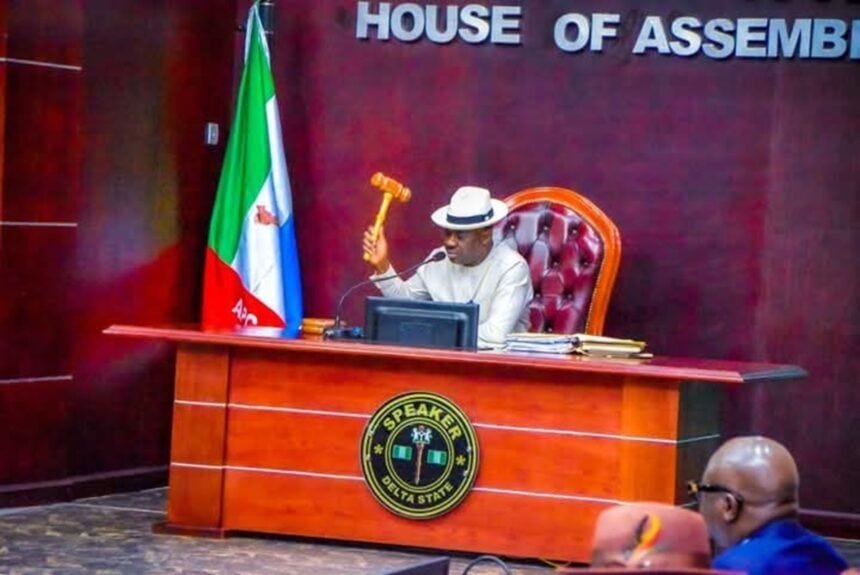
The lawmakers approved the appropriation bill on Wednesday, 25 November, through a voice vote during plenary in Asaba. The session was presided over by Speaker Dennis Guwor.
The governor had presented a ₦1.237 trillion proposal to the Assembly on 16 November. However, lawmakers increased capital expenditure from ₦806.8 billion to ₦842 billion, adding ₦35.2 billion for priority projects. Recurrent expenditure remained unchanged at ₦430 billion.
Presenting the report of the House Committee on Finance and Appropriation, its chairman, Marilyn Okowa-Daramola, said the adjustment would support infrastructure development, stimulate economic activity and improve residents’ living conditions.
She identified education, agriculture, healthcare, industrialisation and youth empowerment as major priorities. The budget also emphasises agricultural production and processing, food security, healthcare access and skills development.
The increase in capital spending means approximately 66 per cent of the approved budget is earmarked for capital projects. This reflects the government’s emphasis on infrastructure and other development programmes.
However, the approved figure remains significantly below the ₦1.729 trillion budget for 2026. The reduction suggests a tighter spending plan for the coming year, although the government will need to demonstrate how its projections align with available revenue.
The budget’s implementation will also depend on the state’s ability to generate revenue and manage its spending obligations. A larger capital allocation does not automatically guarantee completed roads, better hospitals or improved schools. The government must ensure that funds are released on schedule and projects are properly supervised.
The potential beneficiaries include contractors, workers, farmers, students and residents who depend on public infrastructure and services. Businesses could also benefit from improved roads and other facilities. However, communities may see little improvement if projects are delayed or allocations are not translated into completed work.
Following passage, Speaker Guwor directed that a clean copy of the bill be forwarded to Governor Oborevwori for assent. The budget will become law after the governor signs it.
Bottom Line: Delta has increased its development spending, but the real test will be whether the ₦842 billion capital allocation delivers visible improvements across the state.