


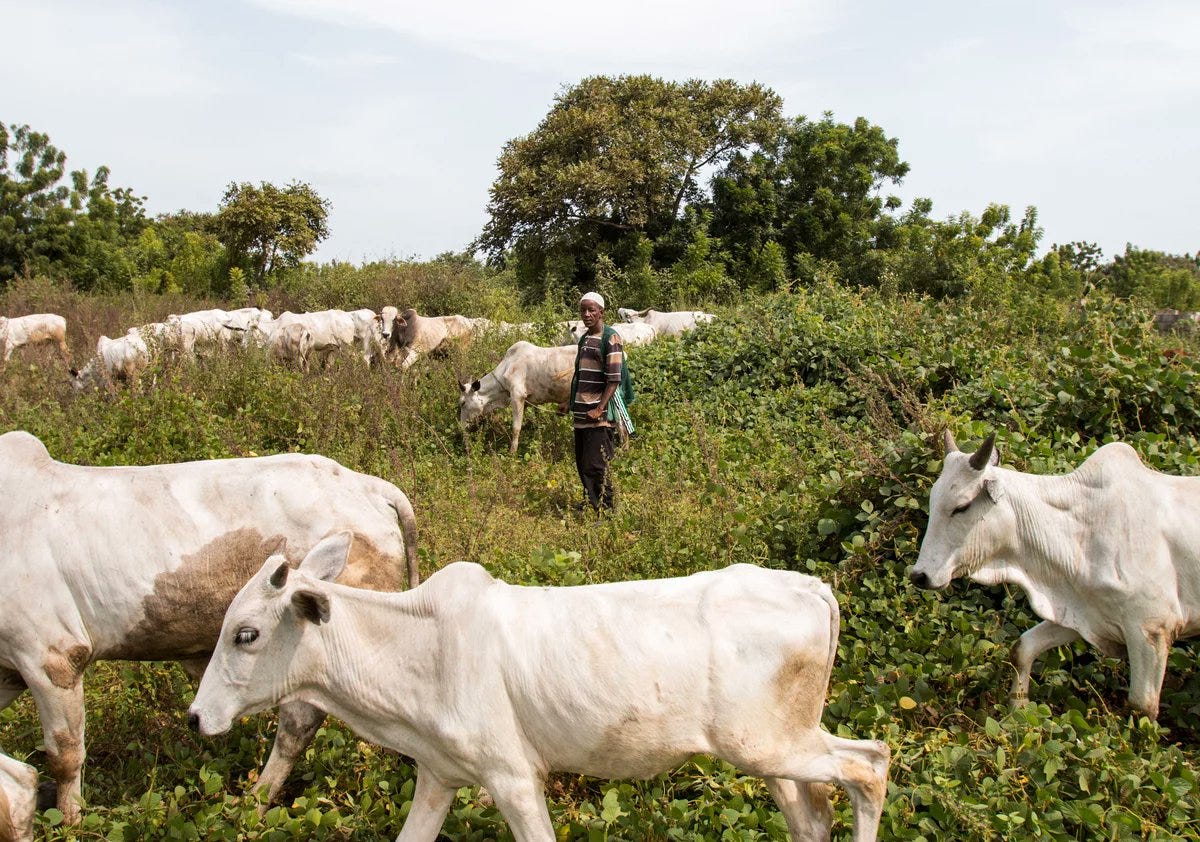
Communities in Delta State are beginning to take what they describe as practical steps to make their communities and kingdoms safe for their people. Oghara Kingdom in Ethiope West Local Government Area is among them, as the people have resolved to enforce a ban on open grazing across the kingdom.
To this end, the kingdom has asked identified indigenes who are cattle traders and leasers of farmlands for grazing to quit their businesses or be held responsible for any insecurity in the area. Kidnapping, armed robbery and killings have become the order of the day in the kingdom. “The security situation in Oghara has got out of hand with several reported documented cases of kidnapping, ransom payment and, just recently, the killing of one of our able-bodied sons. We can no longer fold our arms but to take our destinies in our hands by these resolutions,” they vowed.
According to them, “There is a Delta State Government policy against open grazing, so, here in our kingdom, we are henceforth strictly enforcing it. No more open cattle grazing in Oghara Kingdom”. The resolutions were reached at a meeting aimed at addressing the insecurity challenges currently confronting the Kingdom, held at the Palace of HRM Noble Oyibo Eshemitan Orefe III, Ovie of Oghara Kingdom, with traditional chiefs, youth leaders, identified cattle traders and those who lease out farmlands, other stakeholders and the Oghara Study Group (OSG) in attendance.
David Ugolor, convener of OSG, lauded the monarch and called for the establishment of a Technical Team and the convening of a Town Hall meeting on the security situation. He enjoined the political elite, especially in the locality, “to throw their weight fully behind the cause,” which he described as noble. He urged them to empower the youth, especially those who are taking the bull by the horns in helping to tackle the situation. He also commended the identified cattle traders and those leasing out farmlands for grazing for willingly giving up their sources of income for the security of Oghara Kingdom. The identified cattle traders, on their part, assured the monarch and people that they would keep to their promise to quit the business henceforth if it would bring the much-needed peace to the kingdom.
Some indigenes of the state have continued to fault the federal and state governments for failing to implement the anti-open-grazing law passed in the past. According to them, laws are supposed to be enforced by the police, but the state governments that enacted the anti-grazing laws unfortunately do not have control over the police to ensure enforcement. That brings to the fore the need to have state police, they said. They also believe that merely enacting a law is not enough, as the government must have the political will to enforce the anti-grazing law. Thus, a combination of institutional challenges and a lack of political will is blamed for the non-enforcement of anti-grazing laws across Nigeria.
The Oghara community’s decision reflects a broader trend across Nigeria: citizens taking security into their own hands because the state has failed to protect them. This is not a new phenomenon. The 2010s saw similar community-led security initiatives in the North-east and North-west, where vigilante groups emerged to fill the gap left by an overwhelmed military. The mechanism was different then, but the result was the same: communities were left with no choice but to defend themselves.
The winners: the people of Oghara Kingdom, who have taken a stand. The losers: the Nigerian state, which has lost the trust of its citizens, and the cattle traders who have lost their livelihoods.
Bottom Line: Oghara Kingdom has banned open grazing and told cattle traders to quit. The community is taking security into its own hands. The government is watching. That is not a solution. That is an indictment.