


The Federal Government has restated its commitment to ending terrorism and violent extremism through kinetic and non-kinetic approaches. Ambassador Abimbola Wonosikou, a director at the National Counter Terrorism Centre, gave the assurance at the unveiling of a newly equipped clinic at the Operation Safe Corridor camp in Tsafe, Zamfara. The Centre for Democracy and Development West Africa equipped the clinic with medical equipment. The clinic supports the disarmament, demobilisation and reintegration process in the North West.
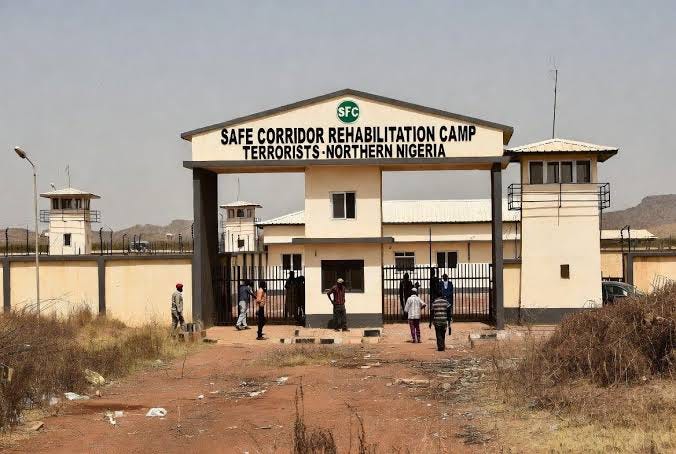
Wonosikou said rehabilitation goes beyond ideological reorientation. It requires attention to physical and psychological well-being. The camp’s national coordinator, Brigadier General Yusuf Ali, called the clinic a milestone in primary healthcare delivery. The commandant, Colonel James Anthony, said the contractor installed a closed-circuit television camera, a 2.5 KVA inverter with six solar panels and a 10,000 litre water tank. Free medical outreach was provided to host communities.
The mechanics matter. Reintegration succeeds or fails on whether former fighters can re-enter society. A clinic is a small but necessary part of that. It treats wounds, infections and trauma. It also signals to host communities that the camp brings benefits, not just risks. That signal matters. Communities often resist hosting rehabilitation camps because they fear attacks. A clinic open to residents builds acceptance.
This mirrors the 2016 launch of Operation Safe Corridor, which has rehabilitated thousands of former Boko Haram fighters. It also echoes the 2009 Niger Delta amnesty, which paired reintegration with infrastructure. The winners are former fighters receiving care; host communities gaining a clinic; the government, which shows a non-kinetic approach. The losers are communities that never receive such support; critics who see reintegration as rewarding violence; and the programme, if funding stops after the cameras leave.
Winners: Former fighters; host communities; the government’s non-kinetic strategy.
Losers: Communities without such support; critics who see reintegration as a reward; the programme if funding lapses.
Bottom Line: A clinic is a small step in a long process. Reintegration works only if host communities trust the camp more than they fear it.