


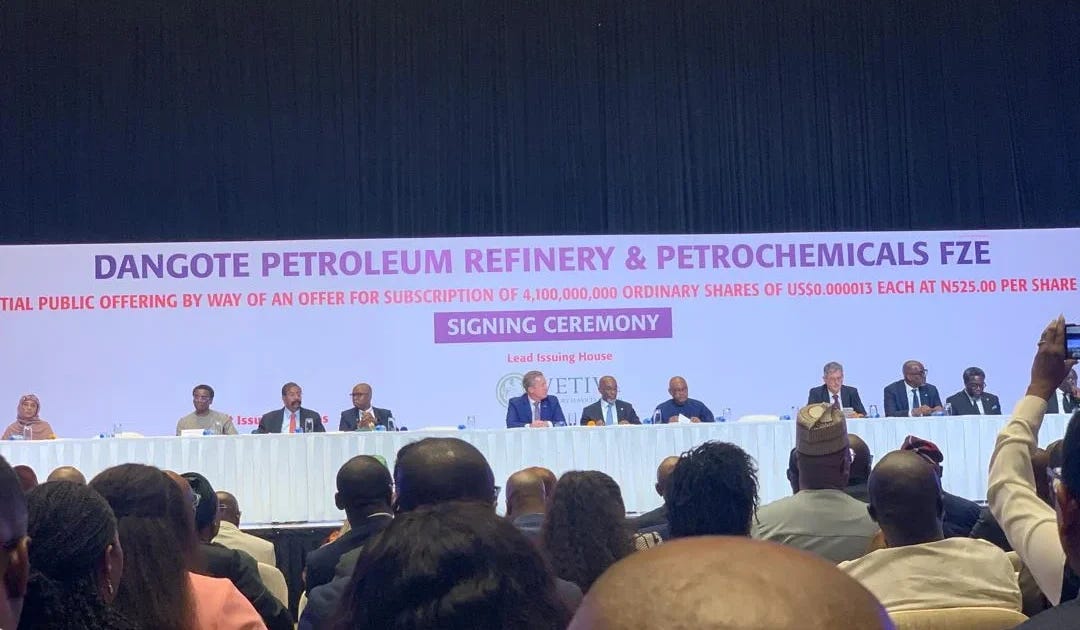
Aliko Dangote announced details of an upcoming ₦2 trillion initial public offering for the Dangote Petroleum Refinery, featuring retail distribution channels designed to allow informal sector workers, including drivers, traders and cooks, to purchase equity shares. The move is a significant departure from traditional IPO structures, which have typically favoured institutional investors and high-net-worth individuals.
The retail-focused distribution channels are designed to democratise ownership of Africa’s largest refinery. Dangote said the IPO would allow ordinary Nigerians to own a piece of the refinery, which has become a symbol of the country’s industrial ambition. The inclusion of informal sector workers is a recognition of the role they play in the economy and an attempt to broaden the investor base. The Dangote Refinery IPO is expected to be one of the largest in African history, and the retail channels could set a precedent for future public offerings in Nigeria.
This echoes the 2021 MTN Nigeria IPO, which also sought to attract retail investors but faced challenges with the distribution of shares. The mechanism then was different, but the ambition was the same: to broaden ownership of a major Nigerian company.
The winners: ordinary Nigerians, who will have the opportunity to own shares in the Dangote Refinery; and the Dangote Group, which will raise capital for expansion. The losers: institutional investors, who may face competition for shares; and the Nigerian government, which must ensure the IPO is transparent and well-regulated.
Bottom Line: Dangote is opening his refinery’s IPO to traders, drivers and cooks. The goal is to democratise ownership. The question is whether ordinary Nigerians will have the means to participate or the opportunity will remain out of reach.