


Dangote Petroleum Refinery exported about 466,000 metric tonnes of jet fuel to Europe in June, valued at an estimated ₦757 billion. The shipment made Nigeria the largest supplier of jet fuel to Europe that month, surpassing the United States for the first time since Nigeria became a net exporter of aviation fuel in 2024.
The volume doubled from 232,000 metric tonnes in May to 466,000 metric tonnes in June, according to a report by S&P Global Commodity Insights. The June shipment is equivalent to about 582.5 million litres of jet fuel. Over the same period, United States exports to Europe fell from 560,000 metric tonnes in May to 399,000 metric tonnes in June.
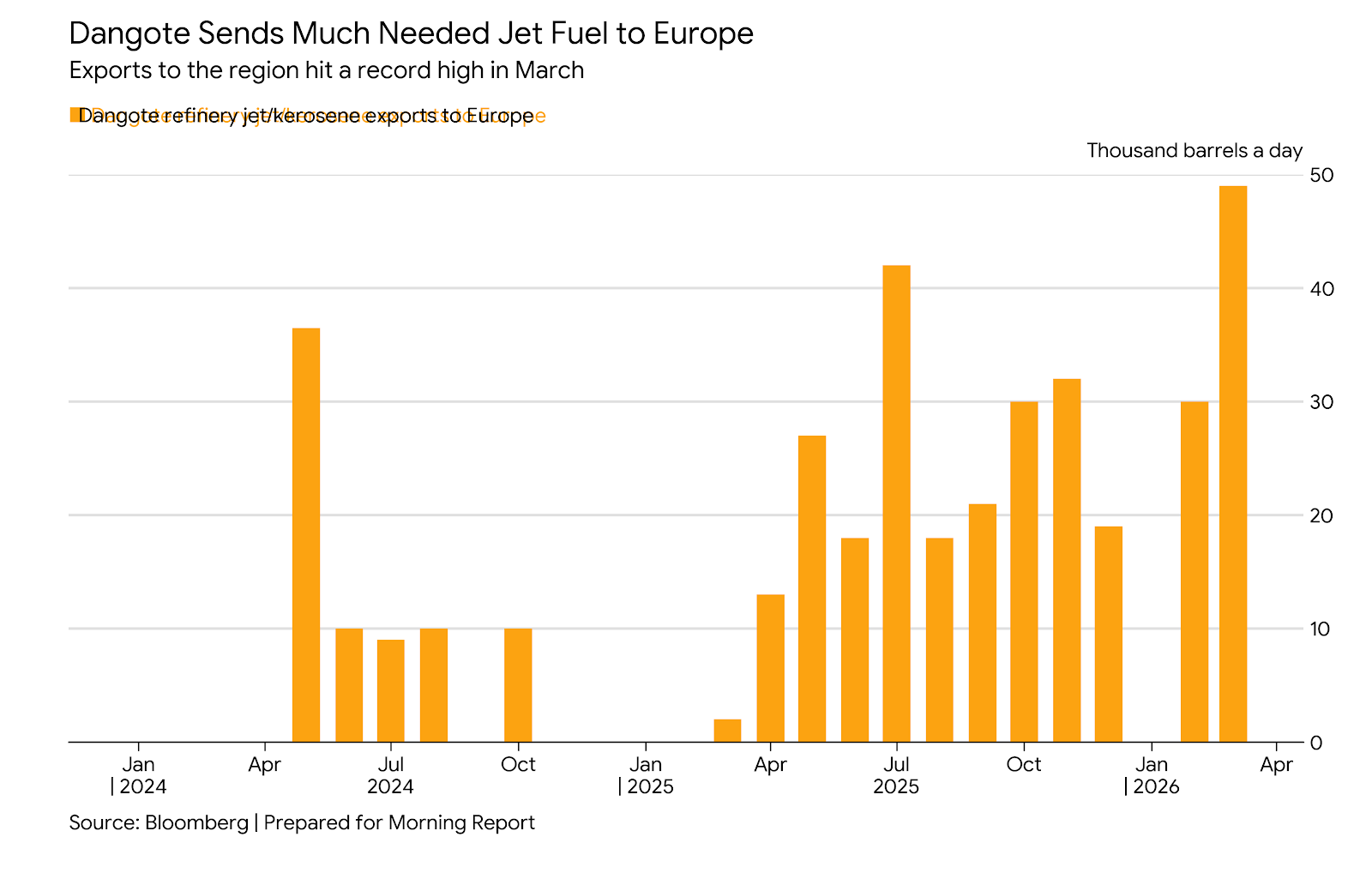
Traders attributed the oversupply in Europe partly to increased shipments from Dangote and the United States, as refiners sought to benefit from earlier high prices. European jet fuel prices have fallen sharply in recent months, with traders expecting an oversupplied summer market amid weaker-than-expected aviation demand.
This development represents a significant shift in global fuel dynamics. Nigeria, historically a net importer of refined petroleum products, has transitioned to an exporter of aviation fuel within just two years of the Dangote refinery’s operations. The refinery, which began production in early 2024, has rapidly scaled up its output and is now competing with established suppliers in the European market.
For the Nigerian economy, the export revenues from jet fuel provide a welcome source of foreign exchange at a time when the country is grappling with dollar shortages. However, the ₦757 billion valuation also underscores the domestic currency’s weakness against the dollar, as the same volume would have been worth considerably less in naira terms just a year ago.
The winners: Dangote Refinery, which has captured a significant share of the European market. Nigerian exporters, who benefit from increased foreign exchange earnings. The losers: European refiners, who face increased competition, and Nigerian consumers, who continue to pay high petrol prices while the refinery exports fuel to Europe.
Bottom Line: Nigeria is now Europe’s top jet fuel supplier. That is good for exports. It is less good for Nigerians who still cannot afford the fuel produced in their own country.