


The economic impact of Dangote Refinery’s suspension is already being felt. Petrol prices at depots in Lagos have climbed above ₦1,200 per litre, according to marketers. This is a significant increase from the ₦860-₦870 per litre price that was common before the suspension. NNPC has raised its depot price to ₦950 per litre, but supply is limited. The result is a classic supply shock: prices spike, and consumers scramble.
“People are panicking, loading at all costs,” a marketer said. “We have started seeing queues at stations because marketers are scared of selling and not being able to restock.” The queues are still localised, but the fear is that they will spread. Nigeria has a history of fuel crises, and the collective memory of long queues and empty tanks is still fresh. The psychological impact of a supply disruption can be as damaging as the physical shortage.
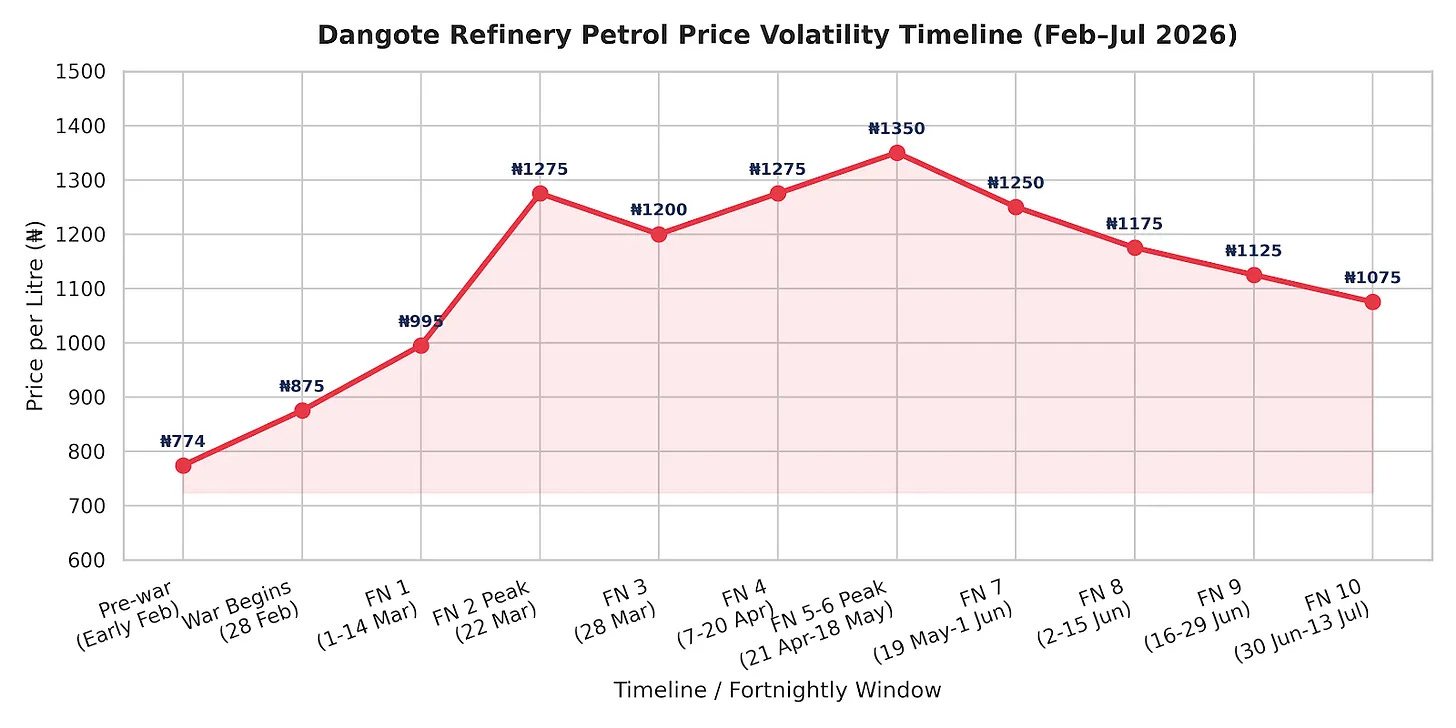
The Dangote Refinery had been operating at about 50% capacity, processing around 300,000 barrels per day. A technical issue with one of its units has halted that. The company has not given a date for the resumption, leaving marketers guessing. This is the cost of a mono-supplier system. When the supplier is functioning, prices are stable. When it is not, the entire market freezes.
Winners: Marketers with stored product, NNPC (which can raise prices).
Losers: Consumers, independent marketers, commercial drivers, the broader economy.
Bottom Line: The Dangote suspension is a reminder that Nigeria’s fuel market is still fragile, and a single point of failure is all it takes to trigger a crisis.