


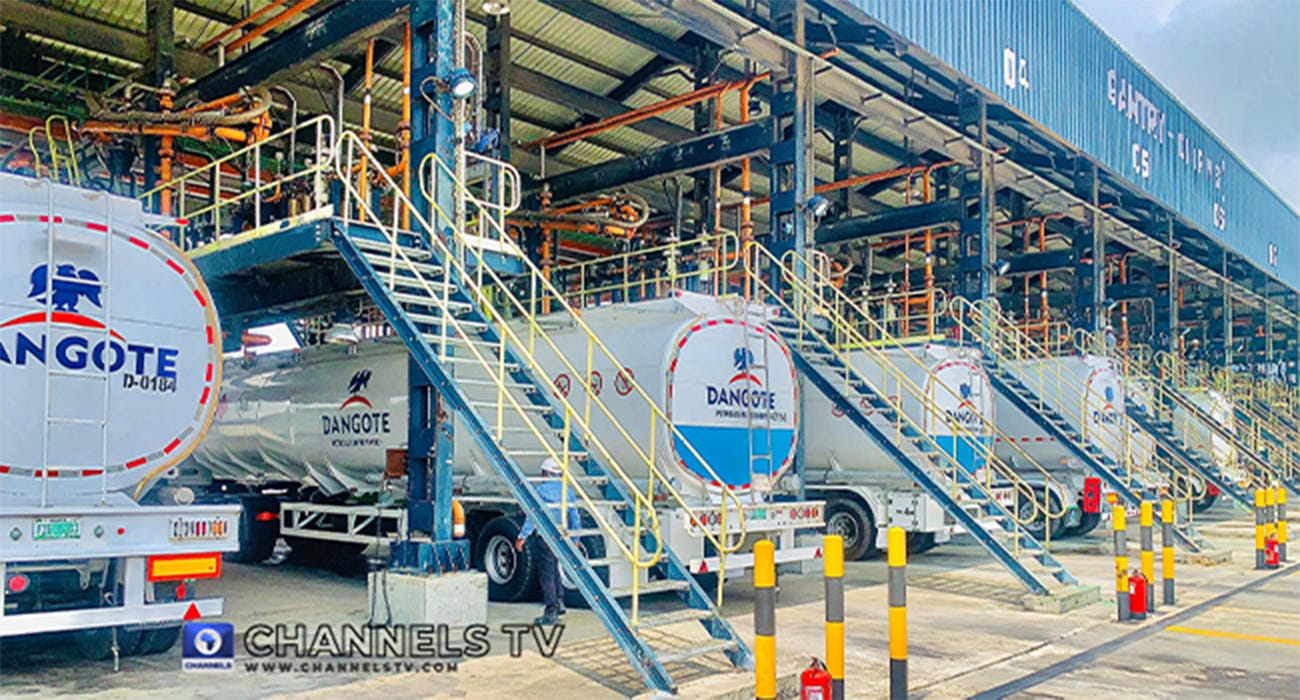
Dangote Refinery has cut its petrol gantry price. The price fell by ₦55, from ₦1,265 to ₦1,210 a litre. That is a 4.35 per cent reduction. The gantry price is what marketers pay when they load petrol at the refinery. The cut is linked to a fall in the European gasoline benchmark, known as EBOB. Lagos depots averaged about ₦1,300 a litre on Thursday. By Friday, some depot owners had cut prices by up to ₦40. Managers at MRS and Nigerian National Petroleum Company Limited stations said pump prices would soon follow. The report did not specify the date of the cut or the pump prices now in force.
Petrol prices have risen sharply since the subsidy was removed in May 2023. Pump prices climbed from about ₦185 to over ₦1,400 per litre in many states. The Dangote refinery began operations in 2024. It was expected to lower prices by boosting domestic supply. That did not happen immediately. The refinery priced its output at import parity. Global benchmarks and exchange rates drove the price. This is the first significant cut. It follows a decline in European gasoline prices. It does not reverse the long-term trend. It signals that domestic refining can respond to global markets.
The cut matters for marketers and consumers. A lower gantry price reduces the cost of loading. Depots responded quickly. Some cut their prices by ₦40. Pump prices are expected to fall. The size of the reduction at the pump is unclear. Retailers may pass on part of the saving. They may absorb the rest to protect margins. The price of petrol remains far above the minimum wage. A full tank costs more than many Nigerians earn in a week. A ₦55 cut is welcome. It is not relief.
The government has pushed for lower prices. It announced a 30-day discount window through NNPC in October. That window is temporary. The Dangote cut is market-driven. It comes from global benchmarks, not policy. The two are different. One is a subsidy by another name. The other is a price adjustment. Consumers will take both. They will notice the difference when the window closes.
Winners: Motorists, who may pay less at the pump. Marketers, who gain volume if prices fall. Dangote Refinery, which shows it can compete. The government, which gains a narrative of falling prices. Transport operators, whose margins improve slightly. Losers: Petrol importers, who face a stronger domestic competitor. Depots that bought at the higher price, which face inventory losses. The government, if pump prices do not fall as expected. Nigerians, if retailers keep the difference. The treasury, if the discount window is extended.
Bottom Line: A ₦55 cut is a signal, not a solution. The gantry price fell because the global benchmark fell. The pump price will follow slowly. Fuel remains unaffordable for most Nigerians. The market is working. The market is not enough.