


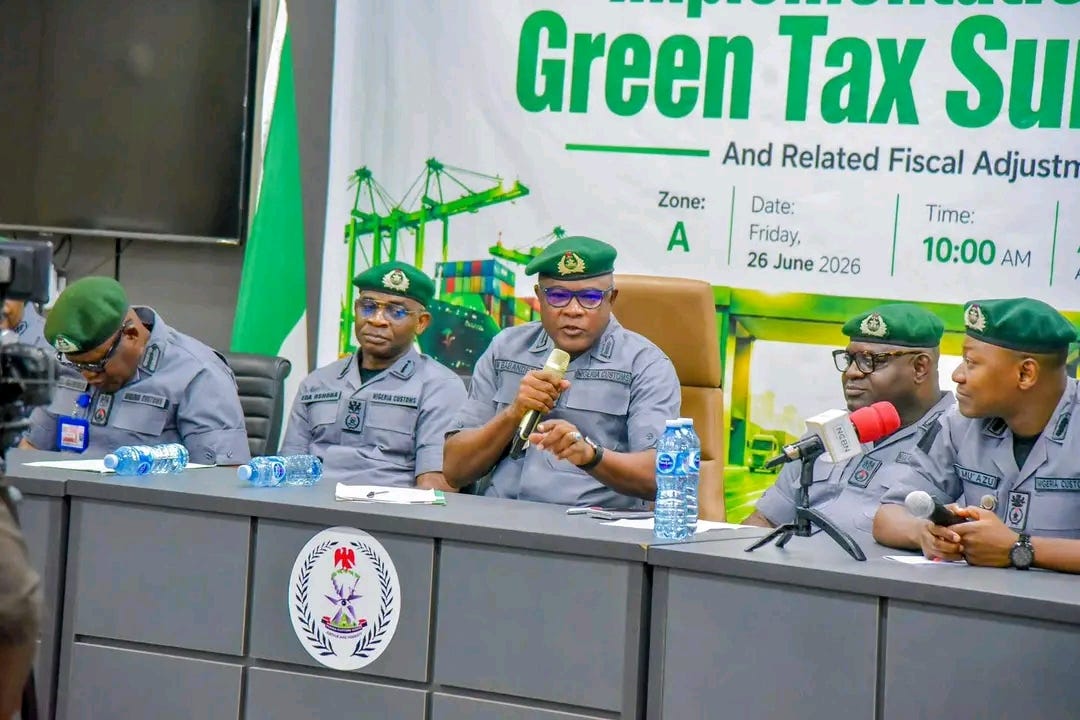
The Nigeria Customs Service (NCS) officially began enforcing the 2026 Tariff Amendments alongside a newly introduced Green Tax targeted at high-emission luxury vehicles. The policy framework aims to incentivise local automobile assembly, curb environmental emissions, and boost non-oil revenue collection.
The Green Tax is a significant step towards addressing environmental concerns and promoting local manufacturing. The tax on high-emission luxury vehicles is intended to discourage the importation of polluting vehicles and encourage the local assembly of cleaner vehicles. The revenue from the tax will support non-oil revenue collection.
This echoes the 2020s environmental tax policies in other countries, which have sought to reduce emissions. The mechanism then was different, but the result was the same: a policy aimed at promoting cleaner vehicles.
The winners: local automobile assemblers, who may benefit from the policy; and the Nigerian environment, which may benefit from reduced emissions. The losers: importers of high-emission vehicles, who face higher costs; and Nigerian consumers, who may face higher prices.
Bottom Line: Customs has begun enforcing a green tax on high-emission vehicles. The goal is to promote local assembly and reduce emissions. The question is whether the policy will achieve its objectives or just raise prices.