


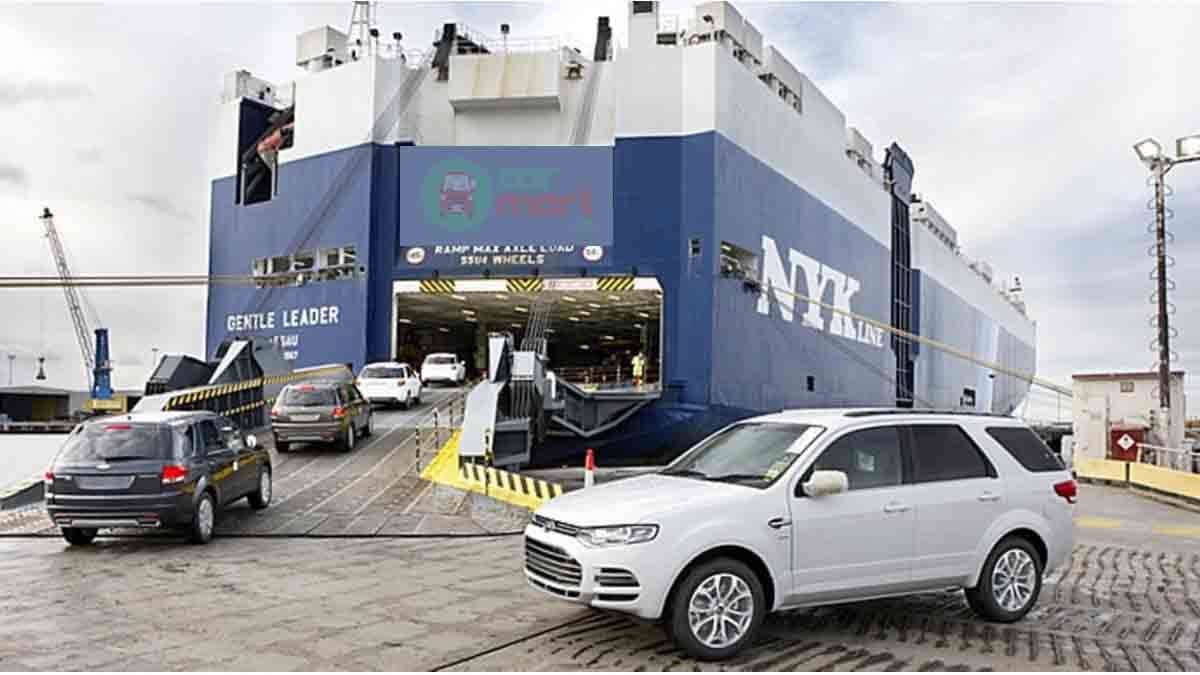
The federal government has reduced import duties on both new and used vehicles under its 2026 fiscal policy measures, the Comptroller-General of the Nigeria Customs Service (NCS), Adewale Adeniyi, has disclosed. Adeniyi announced the tariff review on Monday while defending the service’s 2026 budget proposal before the House of Representatives Committee on Customs and Excise.
He stated that the import duty on used vehicles has been lowered from 15 per cent to five per cent, while the rate for brand-new vehicles has been cut from 20 per cent to 10 per cent. According to him, the revised tariff regime forms part of the government’s broader fiscal policy for 2026 and is expected to support economic activity. However, it could reduce customs revenue from vehicle imports.
“We have the new excise tariff, which is provided in the 2026 fiscal policy. We believe that these measures will increase our revenue collection,” Adeniyi told the lawmakers. “Conversely, during the same tariff measures that were given to us, tariffs on vehicles and levies on vehicles have been reduced significantly. For used vehicles, the tariff has been reduced from 15 per cent to 5 per cent, and for brand-new vehicles, from 20 per cent to 10 per cent. So, we believe that this is something that may also negatively affect revenue.”
During the session, Alex Mascot (Abia State) questioned whether the reduction would be sufficient to discourage importers from diverting cargo through neighbouring ports, particularly Cotonou. “If five per cent has been reduced from the fee that is paid when you import goods into the country, why then do people still move their goods to Cotonou?” he asked. He argued that high import charges had long pushed many traders to clear their goods outside Nigeria and urged the Customs Service to assess whether the new policy would address the challenge.
Responding, Adeniyi said implementation of the revised tariff structure commenced in May. Chairman of the committee, Leke Abejide (APC, Kogi), welcomed the policy, describing it as a positive step for Nigerians. He said many citizens had consistently demanded lower vehicle import duties and commended President Bola Tinubu’s administration for approving the reduction.
Adeniyi also presented the NCS 2025 revenue performance, revealing that the service generated ₦7.258 trillion between January and December, surpassing its approved target. He said the figure exceeded the annual target by ₦1.153 trillion, representing an 18.89 per cent increase. Despite the strong performance, he noted that several government policies constrained revenue collection during the year.
The reduction in import duties is a double-edged sword. Lower tariffs should reduce vehicle costs for Nigerian consumers, who have long complained about high prices. But lower tariffs also mean less revenue for the government, which is already struggling with fiscal deficits. The Customs Service hopes that increased volume will offset the lower rates. That is a bet, not a guarantee.
This mirrors the 2015 vehicle tariff reduction, when the government cut import duties to stimulate the economy. The mechanism was different then, but the result was the same: lower revenue and continued smuggling.
The winners: Nigerian consumers, who will pay less for imported vehicles, and the government, which hopes to boost economic activity. The losers: the Nigeria Customs Service, which faces a revenue shortfall, and domestic vehicle manufacturers, who face increased competition from cheaper imports.
Bottom Line: Vehicle import duties have been cut by half. Consumers will pay less. The government will collect less. That is a trade-off. The question is whether the volume will make up the difference.